Best Time to Visit Bhutan: Weather, Festivals and Entry Rules for Indians
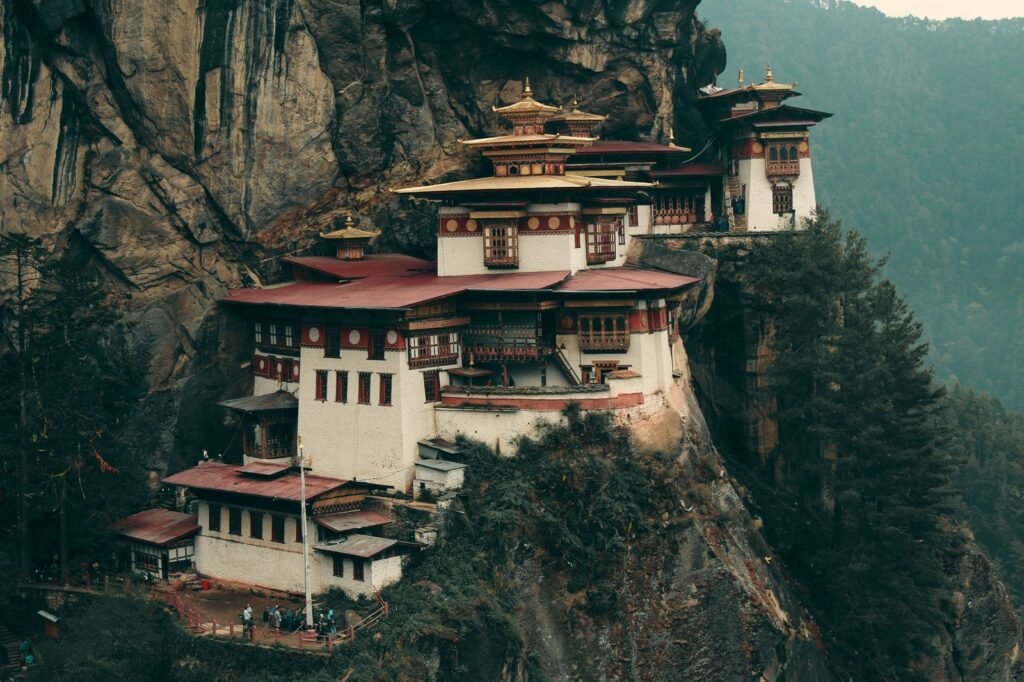
Table of Contents
The best time to visit Bhutan is usually March to May or late September to November, but the right month depends on your plan: rhododendrons, mask-dance festivals, cranes, the Tiger’s Nest or a quiet valley stay. Altitude matters as much as season. Punakha sits near 1,200 m and averages a January afternoon of about 19°C, while Bumthang is above 2,400 m and has January nights near −4°C. Indian travellers also get a practical bonus: a permit instead of a visa, and an ngultrum pegged one-to-one to the rupee.
This guide uses long-term averages from Bhutan’s National Center for Hydrology and Meteorology, plus the Department of Tourism’s own festival calendar and entry rules. Festival dates follow the lunar calendar and fees change, so confirm anything that affects your booking on the official portals.
BeOnd tip: If you can only choose one window, pick October to mid-November, or April. Paro is close to dry in November (about 1.5 mm of rain on average), and the biggest autumn festivals fall in October and November.
The Short Answer: Spring and Autumn
For most first-time visitors the best months are March to May and late September to November. The Department of Tourism calls autumn bright and sunny, the “season of feasts and festivals”, and spring generally dry from early March to mid-April. Paro averages 34 mm of rain in April, 49 mm in October and only 1.5 mm in November.
June to September is the monsoon: Paro’s July brings 161 mm over nearly 19 wet days. December to February is cold, clear and dry, with frost at night and snow above 3,000 m, which suits lower-valley culture trips better than high treks.
| Season | Months | Paro in a line | Best for |
|---|---|---|---|
| Spring | March–May | Highs 18–23°C; showers build from mid-April | Paro Tshechu, blossom, valley walks |
| Summer | June–August | Highs near 25°C; monsoon rain | Green valleys, August mushroom festivals |
| Autumn | September–November | Highs 17–23°C; drier and brighter from October | Thimphu Tshechu, crane festival |
| Winter | December–February | Highs 13–15°C; nights near freezing | Quiet cultural trips, Punakha |
Seasons as defined by the Department of Tourism; temperatures are Paro averages (source as in the table below).
Month-by-Month Weather in Paro and Thimphu
Most trips start at Paro and spend time in Thimphu, so plan around these averages.
| Month | Paro high / low | Paro rain (wet days) | Thimphu high / low | BeOnd verdict |
|---|---|---|---|---|
| Jan | 13.2 / −0.9°C | 7 mm (0.7) | 14.8 / −2.2°C | Cold and dry — frosty nights |
| Feb | 15.0 / 1.3°C | 13 mm (2.1) | 16.6 / 0.3°C | Cold but clear — Punakha festival |
| Mar | 17.9 / 4.3°C | 22 mm (3.7) | 19.3 / 3.8°C | Good — brightening, mostly dry |
| Apr | 20.6 / 7.8°C | 34 mm (6.4) | 22.4 / 7.9°C | Excellent — mild, blossom |
| May | 22.7 / 11.2°C | 59 mm (9.7) | 24.8 / 11.6°C | Good — warm, showers building |
| Jun | 24.6 / 14.5°C | 81 mm (12.5) | 26.7 / 15.3°C | Fair — monsoon begins |
| Jul | 25.0 / 16.1°C | 161 mm (18.5) | 27.0 / 16.5°C | Wet — the wettest month |
| Aug | 24.9 / 15.7°C | 113 mm (17.4) | 27.3 / 16.1°C | Wet — green but cloudy |
| Sep | 23.3 / 14.2°C | 88 mm (13.3) | 26.0 / 14.6°C | Fair — rain easing late |
| Oct | 20.7 / 9.3°C | 49 mm (4.3) | 23.7 / 9.0°C | Excellent — clear and mild |
| Nov | 16.9 / 4.7°C | 1.5 mm (0.2) | 19.7 / 3.2°C | Excellent — driest, crisp |
| Dec | 14.6 / 0.5°C | 3 mm (0.5) | 16.6 / −0.8°C | Cold nights, dry and clear |
Source: National Center for Hydrology and Meteorology normals for 1996–2017 (Paro station at 2,406 m; Thimphu-Simtokha station at 2,310 m), as tabulated on Wikipedia; Paro wet-day counts are WMO figures for 1996–2018. These are averages — individual days vary. “BeOnd verdict” is our own judgement for a first-time visitor.
Spring (March–May): blossom, then showers
March is still jacket weather, with Paro at 17.9°C by day and 4.3°C at night. April is mild (20.6°C), and May reaches 22.7°C, though rain climbs to about 59 mm over nearly ten wet days. Jacaranda trees bloom mauve around Punakha Dzong in spring.
Summer (June–August): green, wet and slower
July is the wettest month in Paro (161 mm) and Thimphu (153 mm). Highs of 25–27°C feel pleasant after a North Indian summer. The Department says the monsoon mostly affects southern Bhutan and can disrupt transport and services; Canada’s official advice adds that landslides occur frequently and roads may become impassable. The border town of Phuentsholing, which adjoins Jaigaon in West Bengal, is far wetter than the western valleys: 807 mm in June and 963 mm in July.
Autumn (September–November): the festival season
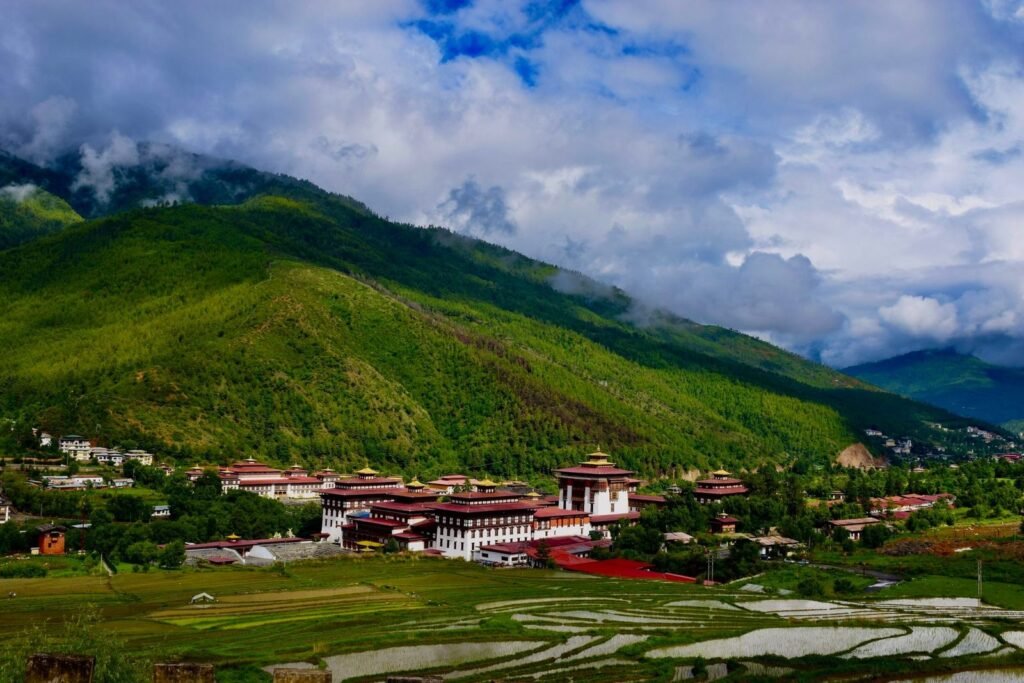
September is still wet (88 mm in Paro), but the skies clear by October: 49 mm over about four wet days, 20.7°C highs and 9.3°C lows. November is crisp and almost dry. Indian school Diwali breaks usually fall in October or November, so they land in Bhutan’s best window.
Winter (December–February): cold, clear and quiet
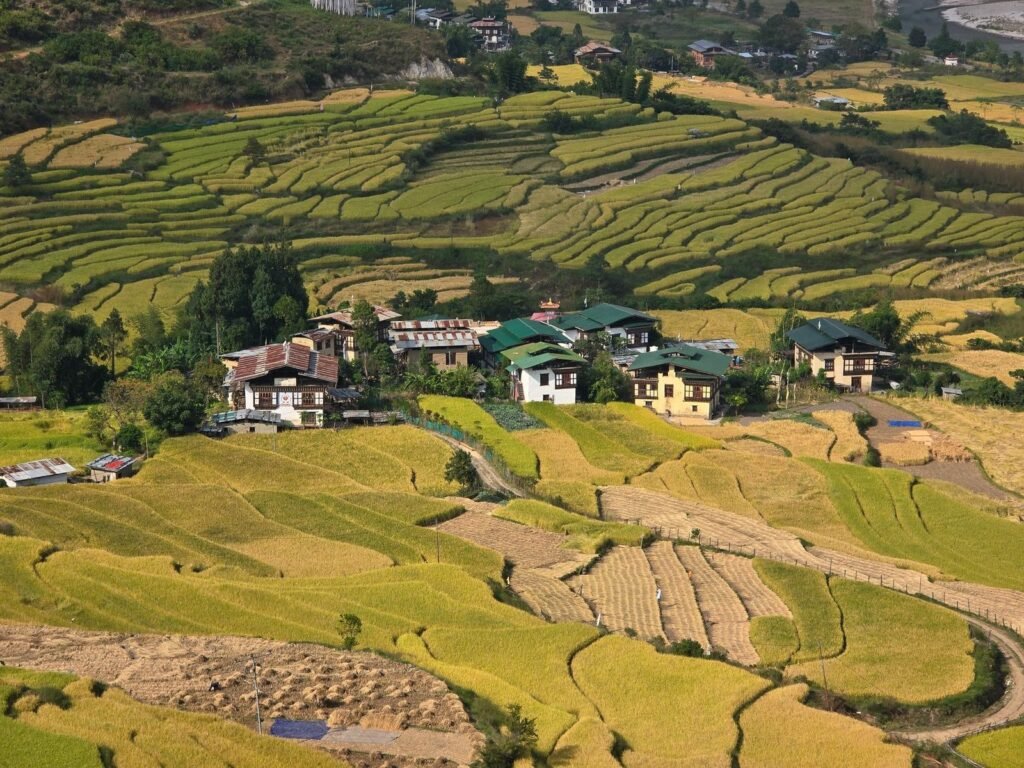
The Department describes late November to March as crisp, clear and sunny, with frost and snow common above 3,000 m. Paro’s lows hover around freezing, and altitude makes it colder: Thimphu’s January low is −2.2°C and Bumthang’s is −3.9°C. Punakha, the winter capital, stays gentler, with an 18.8°C January high and a 5.8°C low.
Best Time to Visit Bhutan by Type of Trip
Culture and festivals
Pick the festival first, then build the trip around it: Paro in spring, Thimphu in autumn, Punakha in February or Jambay Lhakhang Drup in November. If the spiritual side draws you, see our spiritual tours page.
Trekking
Most tour operators recommend spring and autumn. The Department notes snow is common above 3,000 m from late November to March, and Canada’s advice warns that some trails exceed 5,000 m. All treks need an accredited operator or guide, so ask for pass-by-pass advice for your dates.
Birdwatching and cranes
The Department says Bhutan hosts more than 770 bird species. Black-necked cranes reach the Phobjikha Valley in late October and leave in mid-February, so November is the natural month. Many birding operators also favour spring for forest species.
Honeymoons and couples
Our pick is April–May or October–November: mild days and cool nights. Winter suits couples who want quiet, with Punakha the gentlest base. See our honeymoon packages page too.
Families and school holidays
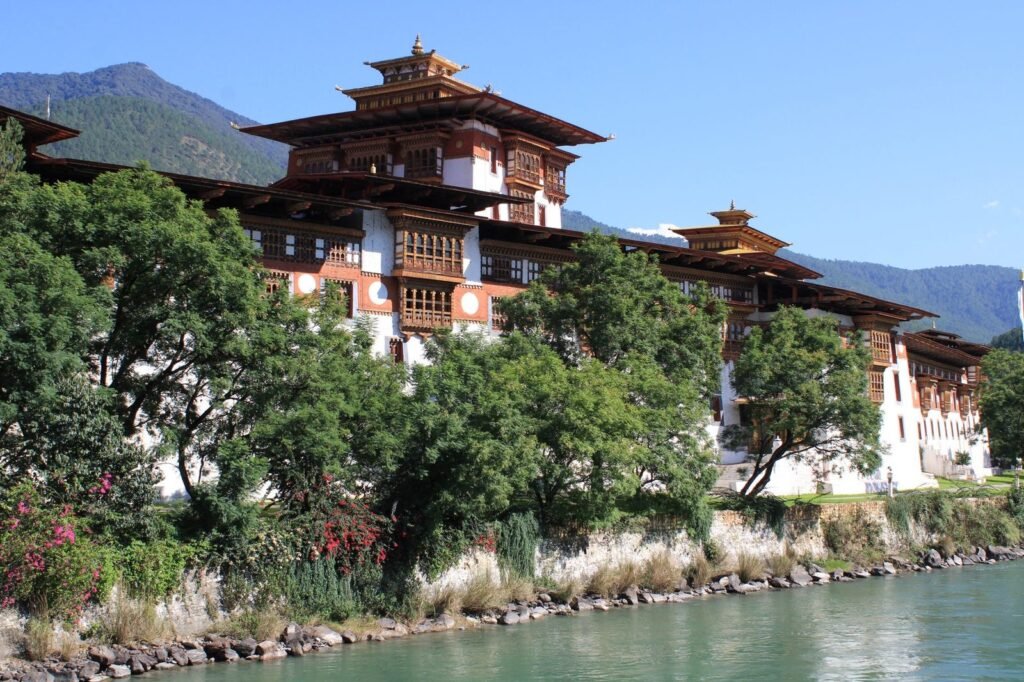
May suits the Indian summer vacation: Paro highs of 22.7°C and about 59 mm of rain. June is unsettled (81 mm over more than 12 wet days) and the monsoon follows, so Diwali-break travel in October–November is the better family window. In December–January, pack warm layers for freezing nights.
Bhutan’s Festival Calendar: Plan Around the Lunar Dates
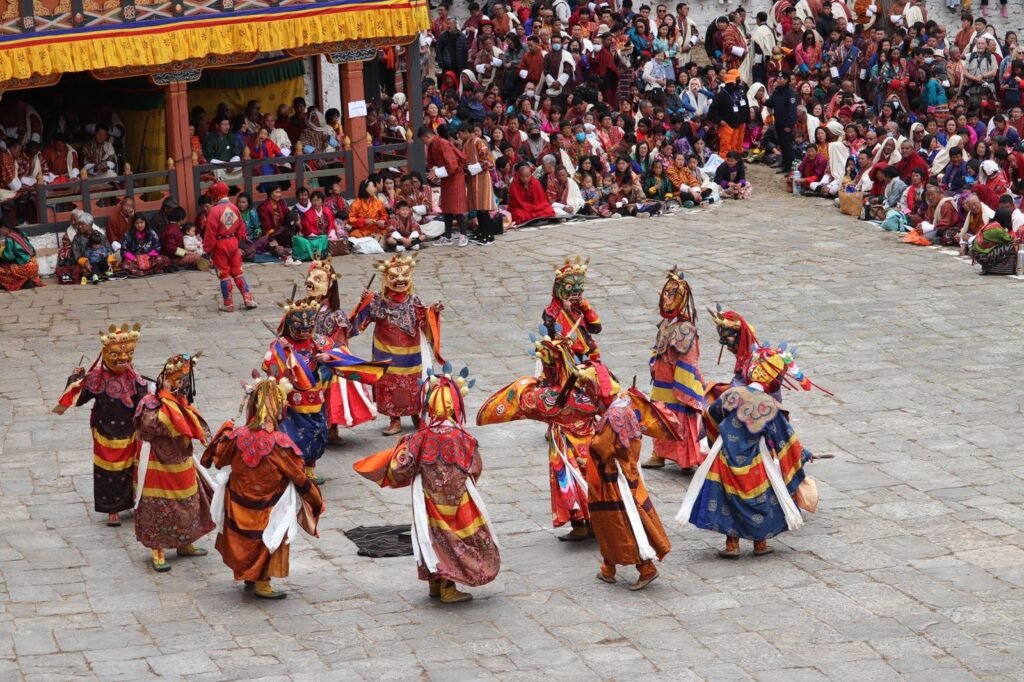
A tshechu is a religious festival held on the tenth day of a month of the lunar Tibetan calendar; which month depends on the place. The centrepiece is cham, costumed dances that are typically moral tales or scenes from the life of Padmasambhava. Most also feature a giant appliqué thangka, the thongdrel, raised before dawn and rolled away by morning. Because the calendar is lunar, the Gregorian dates change every year.
| Festival | Where | Tentative 2027 dates | Season |
|---|---|---|---|
| Punakha Dromchoe and Tshechu | Punakha Dzong | 13–15 and 16–18 February | Winter |
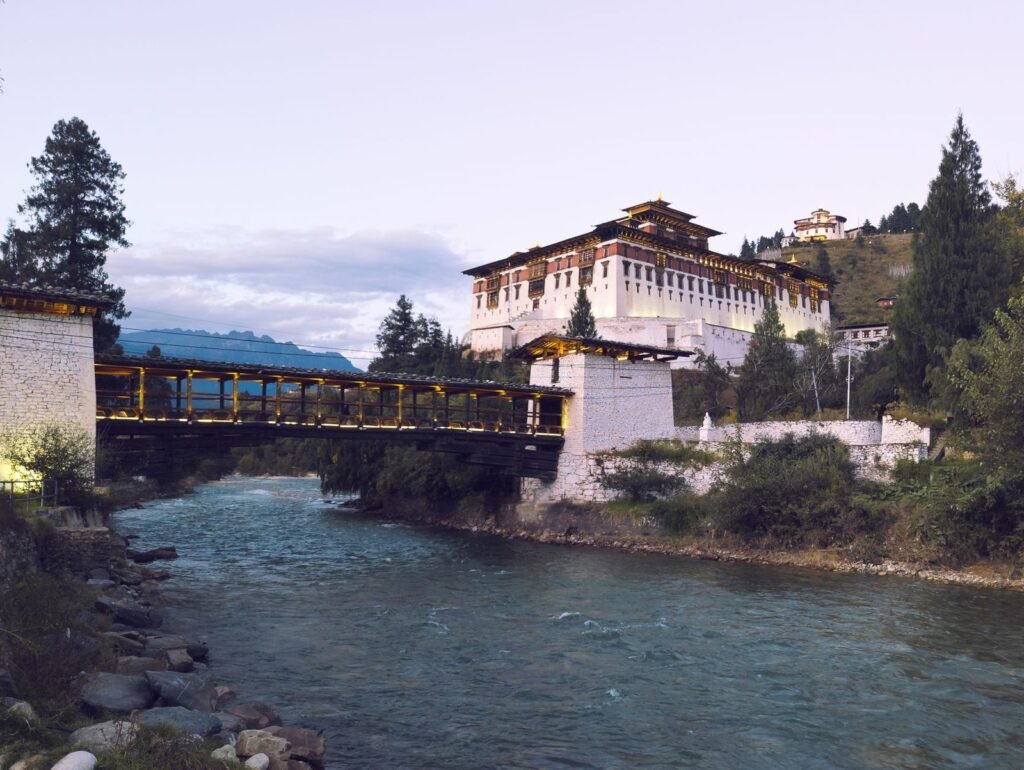
| Paro Tshechu | Rinpung Dzong, Paro | 18–22 March | Spring |
| Thimphu Tshechu | Tashichho Dzong | 10–12 October | Autumn |
| Gangtey Tshechu | Gangtey Gonpa, Phobjikha | 13–15 October | Autumn |
| Black-Necked Crane Festival | Gangtey Gonpa, Phobjikha | 11 November | Autumn |
| Jambay Lhakhang Drup | Jambay Lhakhang, Bumthang | 14–17 November | Autumn |
Source: the Department of Tourism’s “Tentative Festival Dates 2027”, marked “updated as of February 14, 2025”. Tentative dates can change, so confirm the final schedule with the Department or your operator before booking flights and hotels.
Paro Tshechu is the spring festival, with the thongdrel on the final morning. Thimphu Tshechu is the autumn festival at Tashichho Dzong, where the first full public tshechu was held in 1690. Jambay Lhakhang Drup in Bumthang honours the temple’s founding and Guru Rinpoche; Bumthang is in central Bhutan and has its own domestic airport, so plan extra days. The Black-Necked Crane Festival welcomes the cranes to Phobjikha soon after they arrive in late October. Phobjikha is cold, with a mean December minimum of −4.8°C, so pack warm layers. In August, when tshechus do not ordinarily take place, the mushroom festivals in Ura and Genekha, the Department’s journal says, offer mask dances.
Tiger’s Nest (Paro Taktsang): When to Hike It
The Tiger’s Nest clings to a cliff about 10 km north of Paro at 3,120 m, roughly 900 m above the valley floor. It was built in 1692 around the cave where Padmasambhava is said to have meditated, and was damaged by a fire in 1998 before being restored. The Department’s FAQ says a certified guide must accompany visitors, so you will not hike alone.
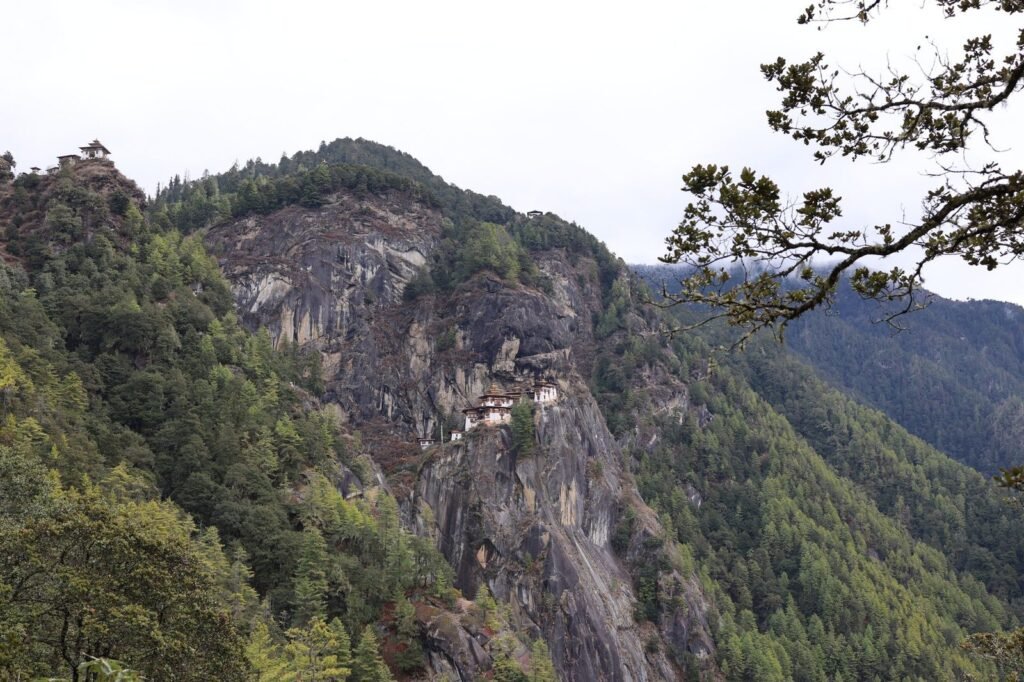
Spring and autumn are the most comfortable seasons. Paro’s highs are 20.6°C in April and 20.7°C in October, and November is almost dry. In July and August the walk is slower and the views patchier: Wikipedia notes that on many days clouds shroud the monastery. In winter the trail is cold but the air is clear.
Operator estimates for the walk vary widely, from roughly two to three hours uphill to half a day or more return, depending on fitness, rest stops and horse use. In 2023 the Department announced that horse rides on the trail must be pre-booked, so ask your guide what applies. Do the hike on day two or three, not straight off the flight.
Altitude and Acclimatisation: What to Know Before You Go
The UK government says altitude sickness is a risk in parts of Bhutan, and TravelHealthPro says it usually occurs above 2,500 m. Paro’s airport is at 2,235 m and Thimphu’s station at 2,310 m. Dochula Pass, on the road to Punakha, is about 3,100 m, the Phobjikha Valley is about 3,000 m and the Tiger’s Nest is 3,120 m. Punakha, at about 1,200 m, is far lower and warmer.
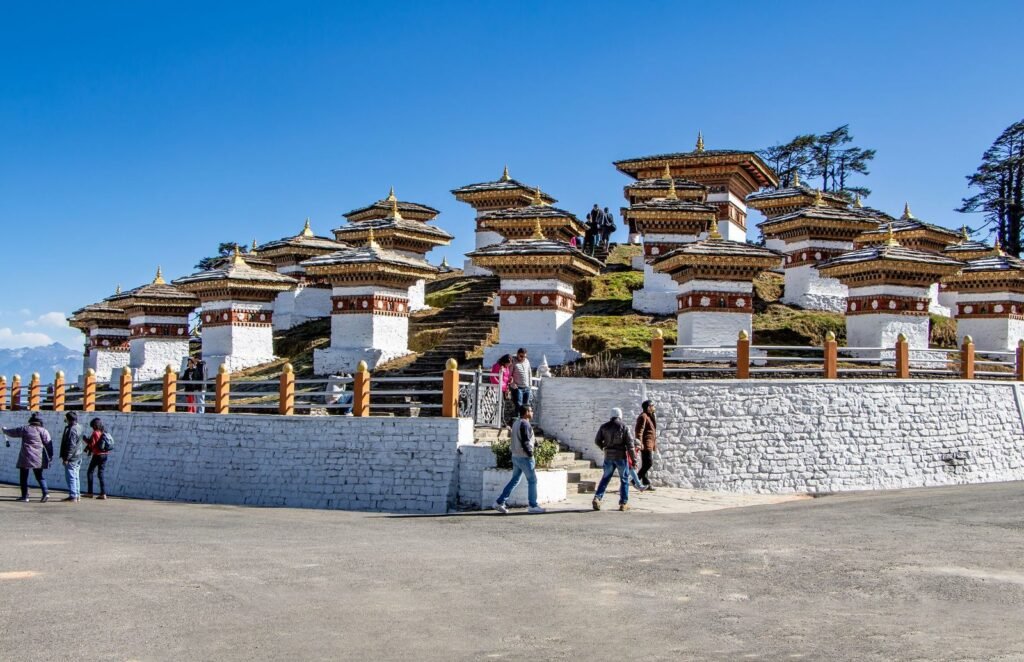
TravelHealthPro’s key advice is gradual ascent with regular rest days. Above 3,000 m it suggests not raising your sleeping altitude by more than 500 m a day. Ask your doctor whether any preventive medication suits you, especially with heart, blood-pressure or breathing conditions or older relatives.
Medical care is limited: Canada’s advice says basic care is available in Thimphu and Paro, and the UK government says complex treatment is not available in Bhutan. Travel insurance stopped being mandatory on 23 April 2024, but the Department strongly recommends it, so check that your policy covers emergency evacuation.
Entry Rules for Indian Travellers: Permit, SDF and Where to Enter
This section follows the Department of Tourism’s own pages, read on 2 November 2026. Rules and fees change, so confirm on the official visa page before you pay or fly.
A permit, not a visa
Indian nationals need a permit, not a visa, and the Department names an Indian passport or voter ID card as the documents. Under-18s can use a passport or birth certificate, with a legal guardian. You can apply online through the Bhutan Immigration Services Portal, ask a tour operator or hotel to apply, or apply at the point of entry, where the Department warns of a possible long wait. Check the portal for any other ID or passport-validity rules.
The Sustainable Development Fee for Indians
The Sustainable Development Fee (SDF) is a daily levy that funds Bhutan’s development. The Department’s FAQ lists the Indian rate as Nu. 1,200 per person per night (or the equivalent in Indian rupees) for travellers with a valid Indian passport or voter ID. Children aged 6 to under 12 pay Nu. 600 a night, and under-sixes pay nothing. It is payable when you apply for the permit, and refundable, minus bank charges, for cancelled or shortened trips.
The SDF has been revised in recent years, and the government’s announcements put end dates on some concessions, such as the reduced rate for dollar-paying visitors, which is stated to run until 31 August 2027. The Indian page we read gave no end date, so check the portal for the rate on your dates. There is also a border-town waiver: up to 24 hours in Samtse, Phuentsholing, Gelephu or Samdrup Jongkhar needs no SDF from 2 June 2026 until August 2027, provided you stay inside the designated zone.
Flying in or crossing by road
The Department’s FAQ lists Paro and Gelephu as Bhutan’s international airports, though most visitors arrive at Paro, and Drukair and Bhutan Airlines fly from Delhi, Kolkata, Bagdogra, Bodh Gaya and Guwahati, among other cities. Paro lies in a deep valley with peaks to 5,500 m and operates in daylight and visual conditions only, so leave a buffer day around fixed commitments. By road, Phuentsholing adjoins Jaigaon in West Bengal. The Department says visitors entering by land need a guide to travel beyond the border towns, and it posted a notice on guide engagement at land ports on 14 September 2026, so read it first.
Other rules worth knowing
- Guides and stays. The FAQ says a certified guide is mandatory, including at monuments and dzongs, and only Department-approved accommodation can host tourists. Confirm how this applies to your group.
- Drones and souvenirs. Tourists are generally not permitted drones, and some artefacts need an export permit.
Practical Tips: Time, Money, Plugs and Etiquette
- Time. Bhutan is on UTC+6 and India on UTC+5:30, so Bhutan is 30 minutes ahead all year.
- Money. The ngultrum is pegged 1:1 to the rupee, and rupee and dollar cash are widely accepted. Cards work in towns but may not elsewhere, and the Department warns that US-dollar-denominated cards do not work for Indian guests because of RBI rules, so bring cards valid for India, Bhutan and Nepal.
- Power. The supply is 230 V at 50 Hz. The Department lists British G, European C and Indian D plugs and suggests adaptors for all three.
- Dress. There are no rules, but clothing covering shoulders to knees is appreciated at religious sites.
Frequently Asked Questions
What is the best time to visit Bhutan?
March to May and late September to November. Paro’s April highs are about 20.6°C with roughly 34 mm of rain, October is similar at 20.7°C with 49 mm, and November is almost dry.
Is the monsoon a bad time to visit Bhutan?
It is the wettest and least predictable season. Paro’s July averages 161 mm over nearly 19 wet days, the Department of Tourism says the monsoon can disrupt transport, and Canada’s advice warns of frequent landslides.
When are the Paro and Thimphu Tshechu in 2027?
The Department of Tourism’s tentative list gives 18–22 March 2027 for Paro and 10–12 October 2027 for Thimphu. The dates follow the lunar calendar and tentative dates can move, so confirm before booking.
Do Indians need a visa for Bhutan?
No, Indian nationals need a permit. The Department of Tourism names an Indian passport or voter ID card as the documents, and you can apply online, through an operator or hotel, or at the point of entry. The Indian SDF is listed as Nu. 1,200 per person per night; check the portal for current rules.
What is the best month for the Tiger’s Nest hike?
April to May or October to November, when Paro’s highs are about 17–23°C and rain is lower. The monastery is at 3,120 m, about 900 m above the Paro valley, and July and August cloud can hide the views.
How cold does Bhutan get in winter?
Paro’s highs are 13–15°C from December to February, with lows around freezing. Thimphu’s January low is −2.2°C and Bumthang’s is −3.9°C, while Punakha stays at 5.8°C. Snow is common above 3,000 m, so winter suits the lower valleys, not high treks.
Helpful Official Resources
Getting there: Paro is Bhutan’s main international airport; the Tiger’s Nest is about 10 km to its north, and Bhutan is 30 minutes ahead of India.
- Bhutan Travel — Department of Tourism — the official tourism site
- Bhutan visa and permit page — Indian permit rules and the SDF
- Bhutan Travel FAQs — weather, currency, plugs and SDF
- Tentative Festival Dates 2027 (PDF) — the Department’s festival list
- Bhutan Immigration Services Portal — where the permit application is made
- Government of Canada — Bhutan travel advice — landslides and safety
- TravelHealthPro — altitude illness — official UK guidance
- Paro — Wikipedia — weather box and background
- Paro Taktsang — Wikipedia — history of the Tiger’s Nest
- Tshechu — Wikipedia — how the festivals work
- Bhutan — Wikidata — structured reference data
- Paro on Google Maps — the airport, Paro Dzong and the trailhead
Ready to Turn This Guide Into a Trip?
Tell us your dates and budget — we’ll handle everything else.