Best Time to Visit Azerbaijan: A Month-by-Month Guide (Including December)
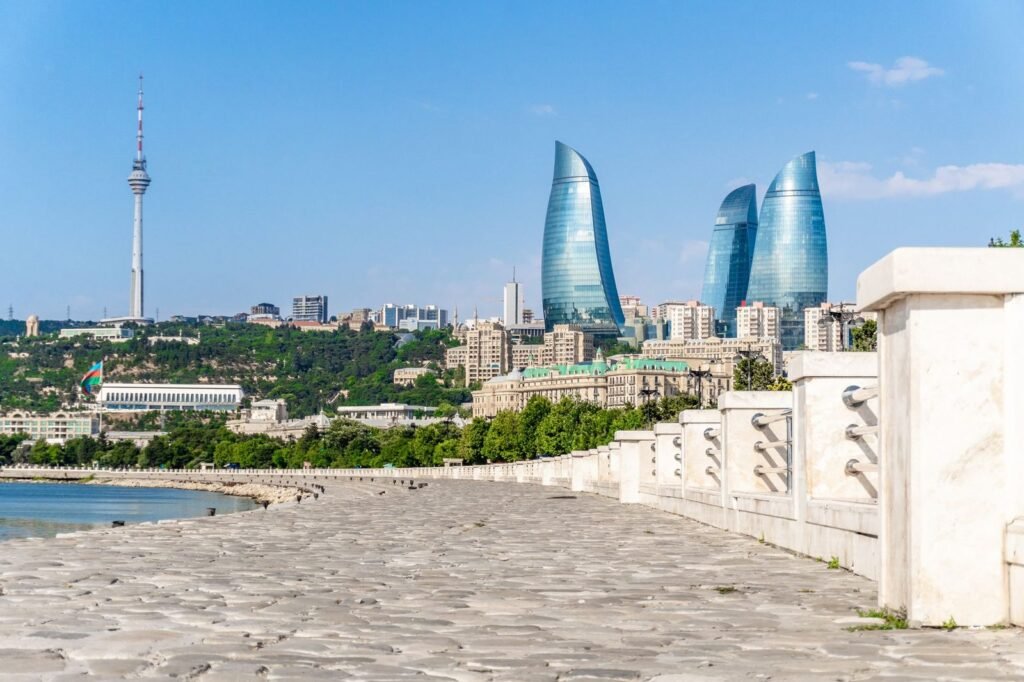
Table of Contents
Azerbaijan is an easy first step into the Caucasus for Indian travellers: an e-visa you apply for online, a compact capital in Baku where a glass skyline stands beside a walled medieval Old City, and mountain towns a few hours away by road. But the weather swings further than most first-timers expect. Baku can be a sunny 30°C in July and a damp 9°C in December, while the mountains of the north-west drop below freezing at night in winter. When you go changes what you will actually do.
This guide gives you the month-by-month picture using long-term climate averages for Baku and for the northern mountain town of Gabala, then answers the question we hear most at BeOnd Journeys: is December a good time to go?
BeOnd tip: If you can only choose one window, pick late April to June or September to early October. Baku is sunny and mild, with far fewer wet days than in winter.
The Short Answer: April to June and September to October
For a first trip built around Baku and day trips, aim for late April to June or September to early October. In Baku, daytime highs climb from about 17°C in April to 28°C in June and are still near 26°C in September. Rain is light — between 9 and 17 mm a month from April to June — and sunshine builds from roughly 195 hours in April to about 300 in June.
July and August are the hottest and driest stretch, with average highs around 30–31°C. December to February is cold and damp in the city but opens the ski season in the mountains. November is the weakest month for a city break: it is Baku’s wettest, with an average of 44 mm of rain.
| Season | Months | Baku daytime highs | Best for |
|---|---|---|---|
| Spring | March–May | 11–23°C | City walks, Gobustan day trips, Novruz festivities |
| Summer | June–August | 28–31°C | Long sunny days, Caspian promenade evenings |
| Autumn | September–November | 26°C falling to 13°C | Warm, settled September; rain returns from October |
| Winter | December–February | 7–9°C | Snow and skiing in the north, festive lights, indoor sights |
Month-by-Month Weather in Baku
Most visitors spend the bulk of their trip in or around Baku, so these averages are the ones that matter for planning. Read the “wet days” and “sunshine” columns as much as the temperatures: they are what make September feel so different from November.
| Month | Avg high / low | Rain | Wet days | Sunshine | BeOnd verdict |
|---|---|---|---|---|---|
| Jan | 7.3 / 2.9°C | 32 mm | 6 | 79 hrs | Cold, damp — mountain snow |
| Feb | 7.6 / 2.7°C | 30 mm | 6 | 75 hrs | Cold — mountain snow still possible |
| Mar | 10.9 / 4.6°C | 18 mm | 5 | 117 hrs | Cool and brightening; Novruz holidays |
| Apr | 16.8 / 8.9°C | 17 mm | 4 | 195 hrs | Good — mild and fairly dry |
| May | 23.4 / 14.6°C | 15 mm | 3 | 281 hrs | Excellent — warm and sunny |
| Jun | 28.0 / 19.7°C | 9 mm | 2 | 300 hrs | Excellent — warm and very dry |
| Jul | 30.5 / 22.9°C | 4 mm | 1 | 312 hrs | Hot — the driest, sunniest month |
| Aug | 30.6 / 22.5°C | 8 mm | 2 | 284 hrs | Hot — still dry |
| Sep | 25.8 / 18.7°C | 29 mm | 2 | 215 hrs | Excellent — warm and settled |
| Oct | 19.5 / 13.2°C | 33 mm | 6 | 145 hrs | Good — mild, rain returns |
| Nov | 13.4 / 8.4°C | 44 mm | 6 | 92 hrs | Fair — the wettest month |
| Dec | 9.4 / 4.7°C | 35 mm | 6 | 94 hrs | Cold — festive lights, grey skies |
Source: Baku (Mashtaga station) climate normals published by NOAA and tabulated on Wikipedia. Temperatures and rainfall are 1991–2020 averages; wet days and sunshine hours are NOAA’s older 1971–1990 figures. These are averages — individual days vary. “BeOnd verdict” is our own judgement for a first-time visitor.
Spring (March–May): brightening fast
March is still jacket weather, with highs near 11°C and about 117 hours of sunshine. By April the city is mild (17°C by day), and May is comfortably warm at 23°C with rainfall down to 15 mm. Novruz, the spring-equinox festival, is Azerbaijan’s biggest holiday: in 2026 the official Novruz holidays ran from 20 to 24 March. It is a festive time to be in Baku, but offices and some businesses close, so check the dates for your year before you book.
Summer (June–August): hot, dry and bright
Highs of about 28–31°C will feel manageable to most Indian travellers, and July is the driest month of the year (about 4 mm). Evenings are best spent on the Caspian waterfront. If you are heading to the mountains, note that nights are far cooler there: Gabala averages a July low of about 18°C against about 23°C in Baku.
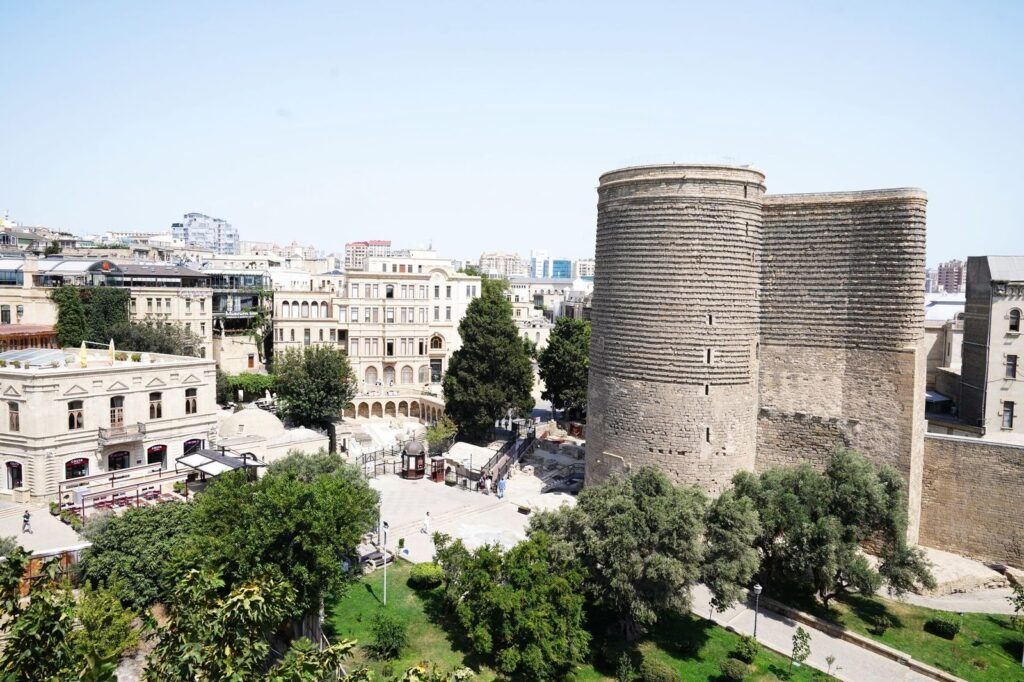
Autumn (September–November): the sweet spot, then the rain
September is the sweet spot: 26°C by day, 19°C at night, just two wet days on average and about 215 hours of sunshine. October is still mild (about 20°C) but the wet-day count rises to six and rainfall to about 33 mm. November turns cool (13°C) and wet, with only about 92 hours of sunshine in the whole month. Indian school Diwali breaks usually fall in October–November, exactly when Baku’s rain returns, so pack a light waterproof.
Winter (December–February): cold and quiet in the city, snowy in the north
Baku’s winter highs sit between 7 and 9°C, with snow on about three or four days a month from December to February. In the Greater Caucasus foothills it is colder: Gabala averages a January high of 4.4°C and a low of −3.9°C. We cover December in detail below.
Azerbaijan in December: What It’s Really Like
December is the month behind many Azerbaijan searches, usually because year-end leave and winter holidays land there. The honest answer: December works well if you want winter atmosphere, snow in the mountains and festive city lights, and it is the wrong month if you are hoping for sunny sightseeing.
The weather
Baku averages a daytime high of 9.4°C and a night-time low of 4.7°C in December, with about 35 mm of rain over roughly six wet days and snow on around three days. Sunshine is scarce — about 94 hours for the entire month, against more than 310 in July — so grey skies are the norm. Baku is also a windy city, which makes it feel colder than the numbers suggest, and it is noticeably colder than a North Indian winter day. In the mountains, Gabala’s December average is a high of 7.0°C and a low of −1.4°C.
Snow and skiing
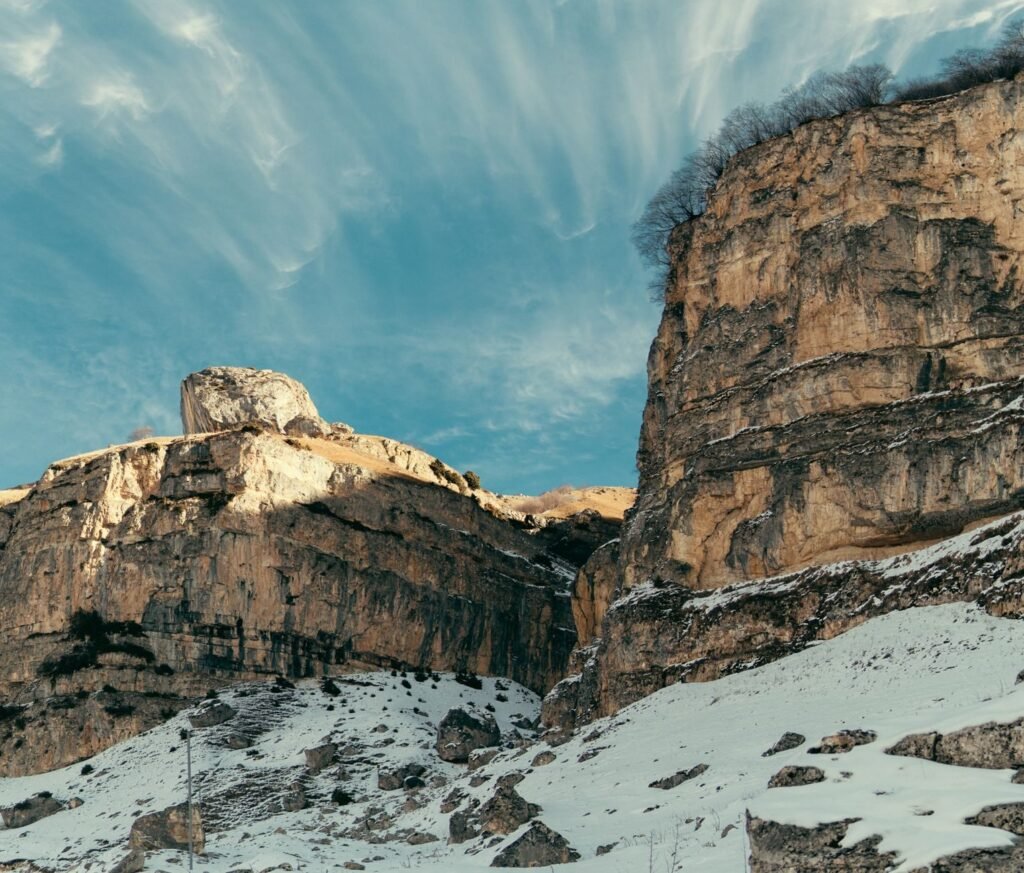
Azerbaijan’s two best-known ski areas are Shahdag, the country’s first and largest winter resort, and Tufandag near Gabala. The ski season typically opens around mid-December and runs to March, sometimes into early April, depending on snowfall. If a snow day matters to you, check the resort’s own status before you fix transport, because opening dates move with the weather.
What to do in Baku in December
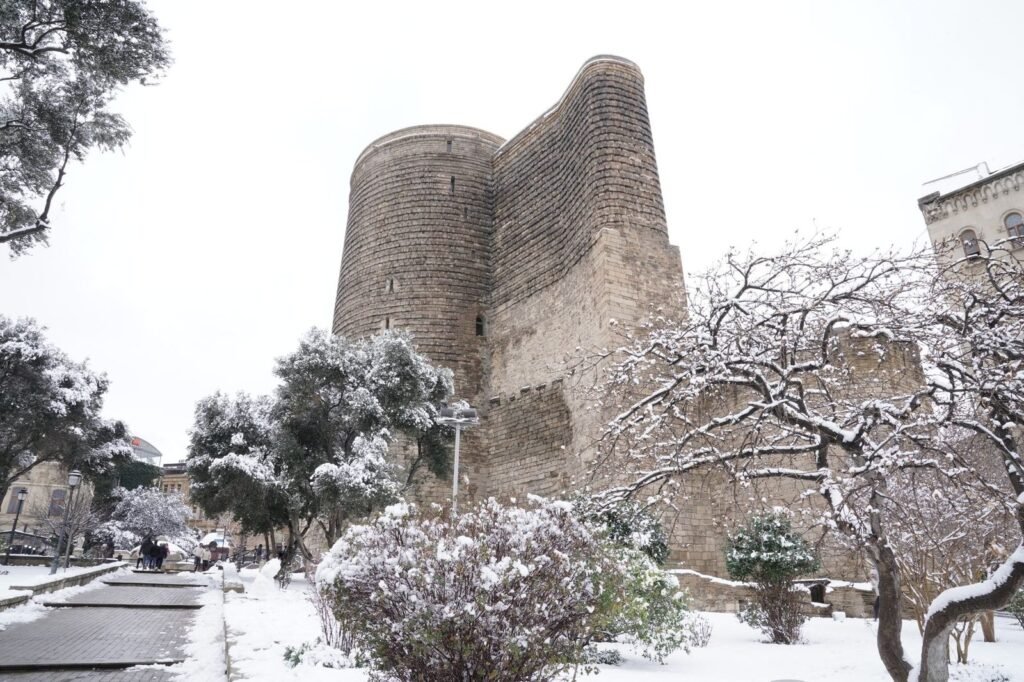
- Walk the Old City (Icherisheher). The stone lanes, the Maiden Tower and the Shirvanshah’s Palace are atmospheric on a cold day; the Walled City of Baku has been on UNESCO’s World Heritage List since 2000.
- Use the indoor sights. The Heydar Aliyev Center, designed by Zaha Hadid, and the Azerbaijan Carpet Museum on the Boulevard are good shelter when it rains.
- Catch the New Year season. Fountain Square and Baku Boulevard are the centre of the city’s festive lighting, with a winter fair and fireworks over the Caspian at midnight on 31 December. Programmes change every year, so confirm details close to your dates.
- Time Gobustan for a dry day. The mud volcanoes and rock carvings are best seen when the ground has not just been soaked; the ground can be muddy after rain.
Who should go in December — and who should skip it
- Go if you want a first taste of snow, enjoy festive city lights, do not mind grey skies and are happy to plan around the weather.
- Skip if you want long sunny days, evenings by the Caspian, or hiking through green hills. Choose May–June or September instead.
What to pack for December
Thermal layers, a windproof and waterproof jacket, a woollen cap and gloves, and shoes with real grip — ordinary Indian winter wear will not be enough for Baku’s wind or the mountains. Add an umbrella for the city and an extra warm layer if you plan to go north.
Best Time to Visit Azerbaijan by Type of Trip
City sightseeing and first trips
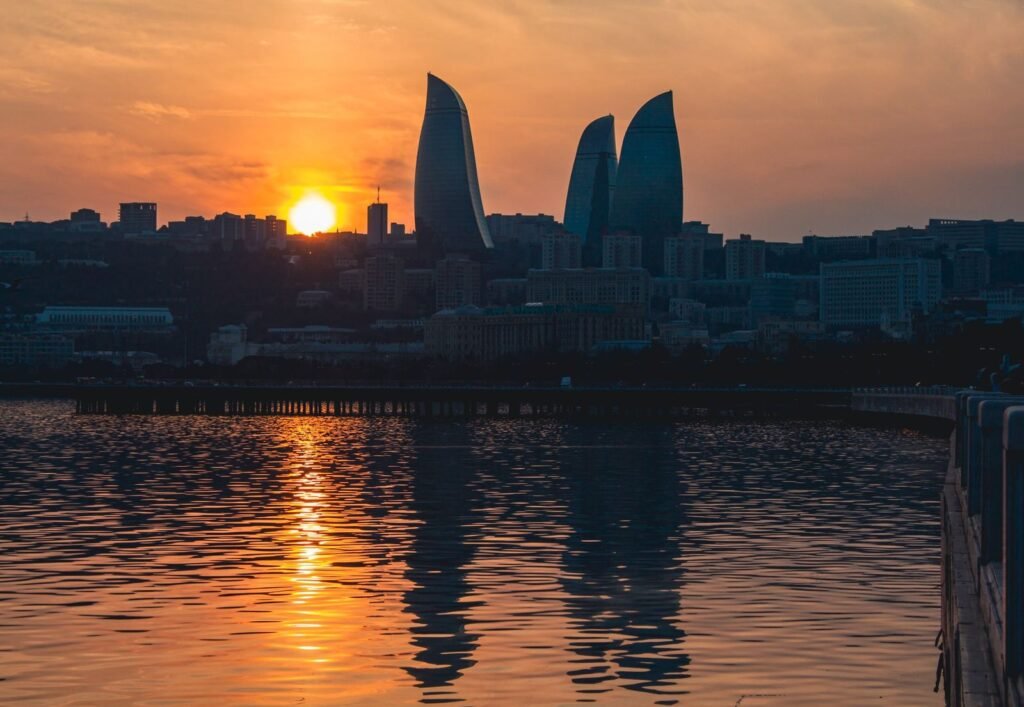
April to June and September to early October give the best mix of mild temperatures, low rainfall and long sunny hours for the Old City, the Boulevard and the Flame Towers skyline.
Honeymoons and couples
May–June and September are the most comfortable for the evening walks, waterfront dinners and open-air viewpoints that make Baku romantic, without the heat of July and August.
Families and school holidays
Summer-vacation travel in May and June suits Baku well (23–28°C, very little rain). Diwali-break travel in October–November meets the wetter months, and a December–January trip means cold weather and, in the mountains, snow: great for children who have never seen it, but plan warm clothing and flexible days.
Mountains, villages and hiking
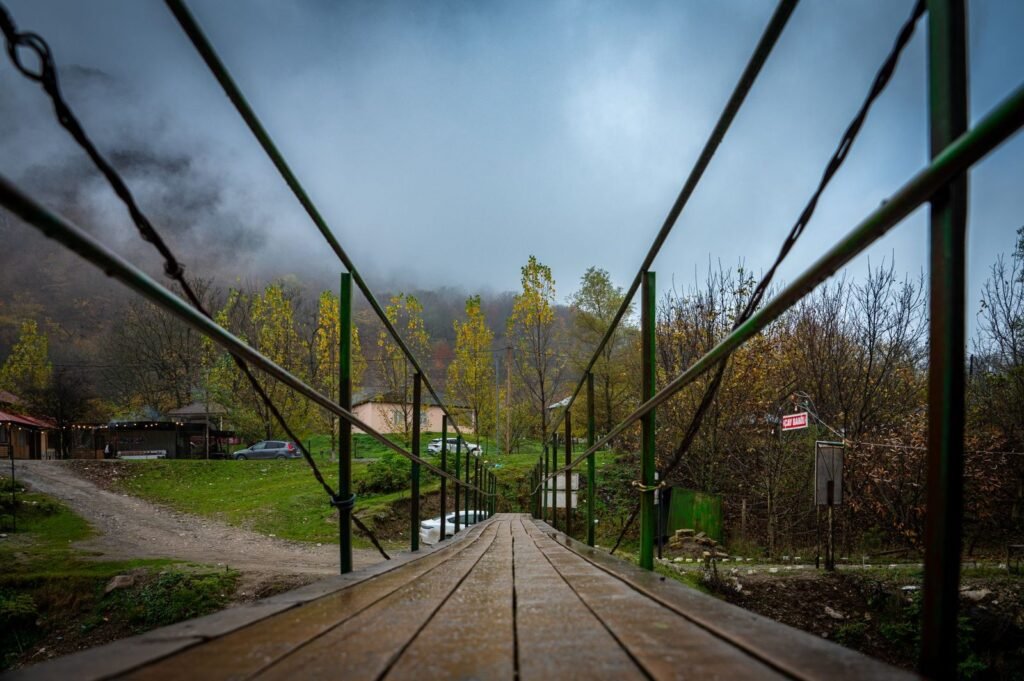
Gabala’s rainfall peaks in May and June (about 100 mm a month) and again in October (about 102 mm), so July to September is the drier stretch for hiking in the north-west. Summer days there are around 29°C, but nights are noticeably cooler than in Baku.
Snow and skiing
Mid-December to March is the core ski window at Shahdag and Tufandag, extending into early April in good years. Peak snow depends on the winter, so build a buffer day into your plans.
Festivals and Events That Can Shape Your Dates
- Novruz (around 20–21 March). The spring-equinox holiday is Azerbaijan’s most important festival. In 2026 the official public holidays ran 20–24 March. Expect celebrations in Baku and closed offices; ideal if you want culture, less ideal if you need business appointments.
- New Year (31 December). Fountain Square and Baku Boulevard host the winter fair, the decorated tree and midnight fireworks. Book early for this week.
- Formula 1 Azerbaijan Grand Prix. Baku’s street circuit hosts the race each year; in 2026 it ran on Saturday 26 September. If you want to go, book transport and hotels well ahead; if you do not, check the calendar and avoid the race weekend.
Beyond Baku: When to Visit the Day-Trip Destinations
Gobustan: rock carvings and mud volcanoes
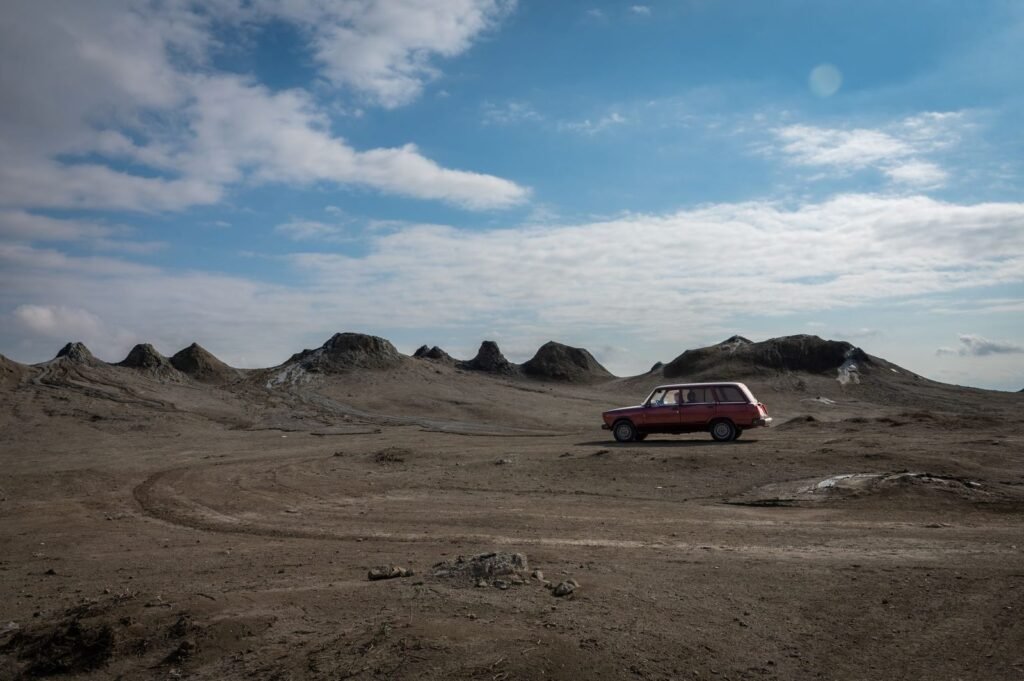
About 70 km south-west of Baku, the Gobustan reserve protects more than 6,000 rock carvings, some thought to be 5,000 to 20,000 years old, plus fields of small mud volcanoes. Its rock-art landscape was inscribed by UNESCO in 2007. Go on a dry, clear day — April to June and September are ideal.
Absheron peninsula: the fire sights
Azerbaijan is nicknamed the “Land of Fire”. Near Baku, Yanar Dag is a natural-gas flame that burns constantly on a hillside, with flames rising up to about 3 metres, and the Ateshgah (the “Fire Temple of Baku”) sits in the Surakhany district. The flames are most striking at dusk and after dark, which also makes them a good cold-season outing.
Quba and Khinalug
Quba lies about 168 km from Baku on the north-eastern slopes of Shahdag mountain. High above it, the ancient village of Khinalug was added to UNESCO’s World Heritage List in 2023. Mountain roads are easiest from late spring to early autumn; in winter, snow can affect access, so confirm conditions before you commit.
Sheki: Khan’s Palace and Silk Road history
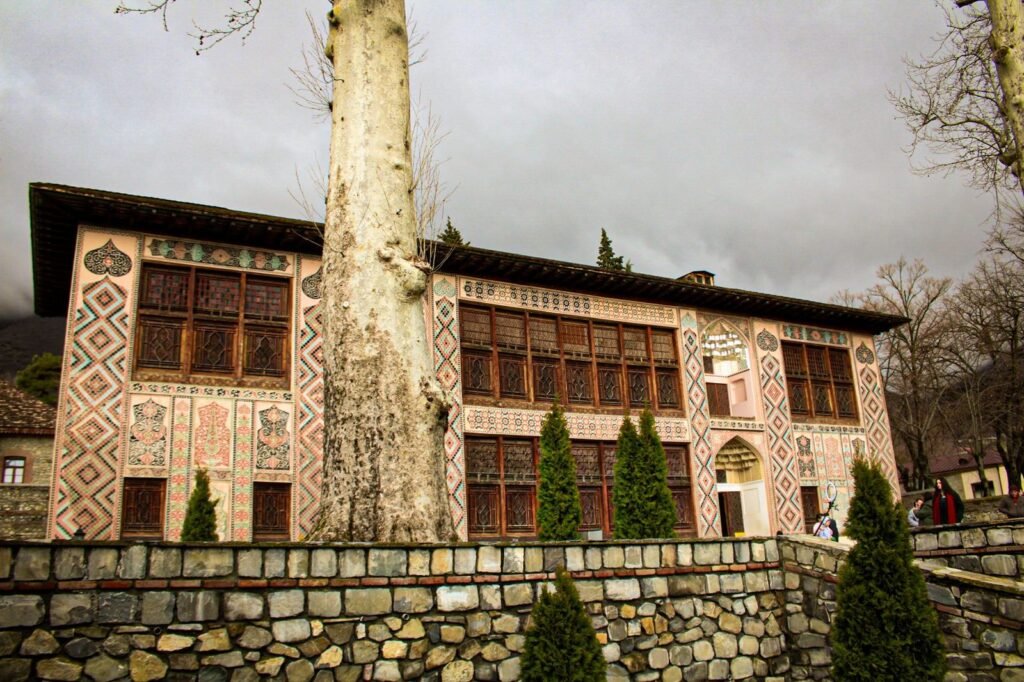
Sheki, about 240 km from Baku in the southern Greater Caucasus, is famous for the Khan’s Palace, and its historic centre was inscribed by UNESCO in 2019. It is a long drive, so plan an overnight stay rather than a rushed day trip.
Gabala and Shahdag: nature and snow
The north-west is where Azerbaijan turns green in summer and white in winter. Gabala is the base for forest walks and Tufandag, while Shahdag in Qusar is the main winter-sports centre.
Visa, Time Difference and Practical Tips for Indian Travellers
- Visa. Indian passport holders apply online for an Azerbaijan e-visa through the official ASAN Visa portal (evisa.gov.az). Standard processing usually takes a few working days, but fees and timings change, so check the portal for current details and apply well before you travel. Plan to have the approval in hand before you fly, and re-check entry rules and advisories close to departure.
- Time difference. Azerbaijan runs on UTC+4 all year, so it is 1.5 hours behind India.
- Currency and power. The local currency is the Azerbaijani manat (AZN). Sockets are the two-pin European type (C/F) at 220 V, so carry a travel adapter.
- How many days. Four or five days cover Baku, Gobustan and the Absheron fire sights. Add three to four more to include Quba and Khinalug, Sheki, or Gabala and Shahdag.
- Book early for peak dates. New Year week and Grand Prix weekend are the busiest times in Baku.
Frequently Asked Questions
What is the best month to visit Azerbaijan?
For most first-time visitors, May and June or September are best. Baku is warm (about 23–28°C in May–June and 26°C in September), sunny and has very little rain. April and early October are good second choices.
Is December a good time to visit Azerbaijan?
It depends on what you want. December suits travellers who want winter atmosphere, festive lights in Baku and snow in the mountains. Baku averages 9.4°C by day with grey skies and about six wet days, so it is not the month for sunny sightseeing.
Is Azerbaijan too hot in summer?
Baku averages about 30–31°C in July and August with very little rain. That is hot but manageable by Indian standards, and the evenings on the waterfront are pleasant. The north-west mountains have cooler nights.
When does it snow in Azerbaijan, and when is the ski season?
Baku sees snow on a few days from December to February. In the mountains the ski season typically runs from mid-December to March, sometimes into early April, depending on snowfall. Always check the resort before you travel.
Do Indians need a visa for Azerbaijan?
Yes. Indian passport holders apply for an e-visa online through the official ASAN Visa portal (evisa.gov.az) before travelling. Fees and processing times change, so check the portal for current details and apply well in advance.
How many days do I need in Azerbaijan?
Four to five days cover Baku, Gobustan and the fire sights near the capital. Seven to nine days let you add Quba and Khinalug, Sheki, or Gabala and Shahdag.
Helpful Official Resources
Getting there: Gobustan is about 70 km south-west of Baku, Quba about 168 km and Sheki about 240 km to the north-west, and Azerbaijan is 1.5 hours behind India. Plan transfers and overnight stops accordingly.
- Visit Azerbaijan — the official tourism portal for destinations, events and winter activities
- ASAN Visa e-visa portal — the official site for Azerbaijan e-visa applications
- UNESCO — Walled City of Baku — Shirvanshah’s Palace and Maiden Tower, inscribed 2000
- UNESCO — Gobustan Rock Art Cultural Landscape — inscribed 2007
- UNESCO — Historic Centre of Sheki with the Khan’s Palace — inscribed 2019
- Baku — Wikipedia — climate table, districts and background
- Azerbaijan — Wikipedia — geography, regions and background
- Fountains Square Christmas Market — Wikipedia — Baku’s winter fair
- Novruz holiday dates — OfficeHolidays — check the holiday dates for your travel year
- Azerbaijan — Wikidata — structured reference data
- Baku — Wikidata — structured reference data
- Baku on Google Maps — attractions, distances and directions
Ready to Turn This Guide Into a Trip?
Tell us your dates and budget — we’ll handle everything else.