Japan Itinerary for 10 Days: Osaka to Tokyo, Day by Day
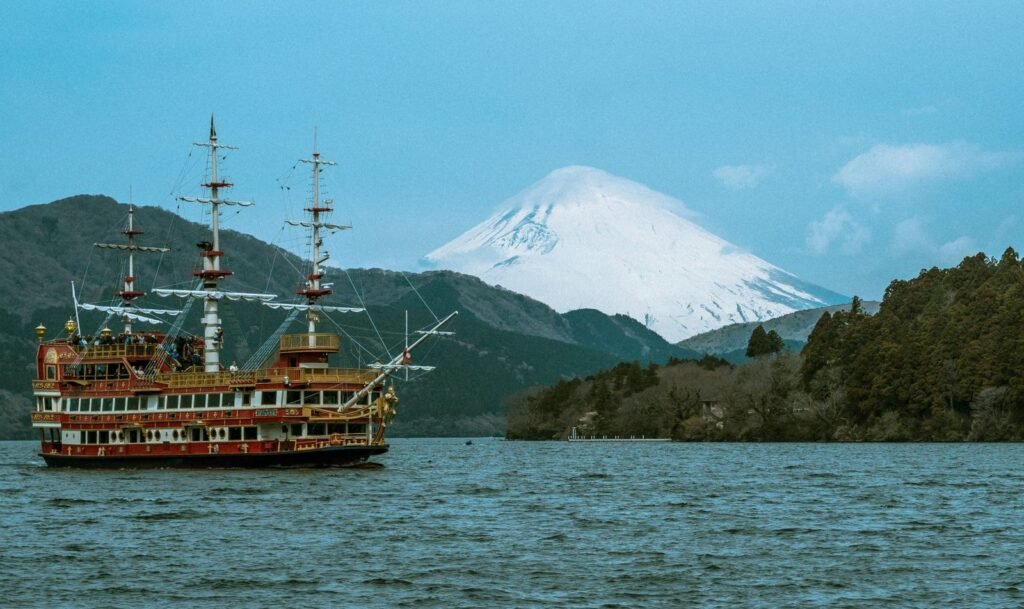
Table of Contents
The simplest Japan itinerary 10 days can hold is a one-way line: land in Osaka, ride the bullet train, fly home from Tokyo. You see Nara and Kyoto first, Mt Fuji and Hakone in the middle and Tokyo at the end, with no day wasted doubling back. This guide walks the route day by day and answers what Indian travellers ask most: which months work, how the e-visa works, the time difference and how much cash to carry.
It follows the outline of BeOnd Journeys’ new 9-night, 10-day Japan package. The day plan below is a typical sequence we can rearrange around flight times, not a fixed schedule, and rates depend on group size, so there is no price on this page.
BeOnd tip: Treat Day 1 as a soft landing. Japan is 3 hours 30 minutes ahead of India, so even an easy flight leaves you tired: keep the first evening to a short walk and a good dinner.
Why Osaka to Tokyo Works, and Your 10 Days at a Glance
Why this route suits a first visit
JNTO, Japan’s tourism board, publishes a classic two-week first-timer itinerary through Tokyo, Hakone, Kyoto, Osaka and Hiroshima. Ten days keeps the core and drops Hiroshima: Kansai’s ancient capitals, Fuji and Hakone, and Tokyo. Nara was Japan’s first permanent capital from 710, Kyoto the imperial capital from 794, and Tokyo, then called Edo, became the Tokugawa shogunate’s seat in 1603.
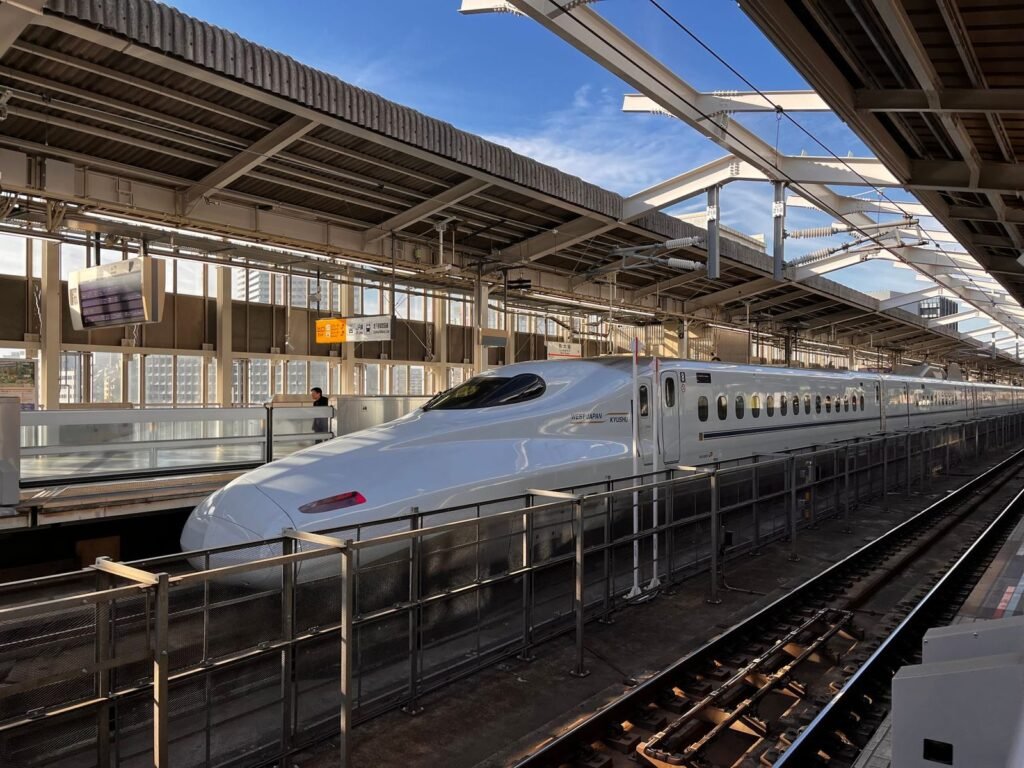
The two ends are joined by the Tokaido Shinkansen, the world’s first high-speed rail line, opened in 1964 and run by JR Central. The fastest Nozomi trains cover the 515 km between Tokyo and Osaka in 2 hours 21 minutes, and JNTO gives the usual journey as about 2.5 hours. In the 2019 financial year the average delay was just 12 seconds.
The 10 days at a glance
Four nights are around Osaka and five in Tokyo, with Day 10 for departure. Private 7-seater cars are used throughout, and entry tickets are included for the Umeda Sky Building, the Osaka–Tokyo bullet train, Universal Studios Japan, Tokyo DisneySea, Shibuya Sky, the Shibuya go-kart, the Lake Ashi cruise, the Hakone ropeway, Tokyo Skytree and teamLab Planets.
| Day | Base | Typical sequence |
|---|---|---|
| 1 | Osaka | Arrival, check-in, evening in Dotonbori |
| 2 | Osaka | Umeda Sky Building, Osaka Castle, city sightseeing |
| 3 | Osaka | Universal Studios Japan |
| 4 | Osaka | Nara and Kyoto day tour |
| 5 | Osaka to Tokyo | Bullet train, then Shibuya (Shibuya Sky, go-kart) |
| 6 | Tokyo | Mt Fuji and Hakone, Lake Ashi cruise, ropeway |
| 7 | Tokyo | Tokyo DisneySea |
| 8 | Tokyo | Tokyo sightseeing |
| 9 | Tokyo | Tokyo Skytree and teamLab Planets |
| 10 | Tokyo | Departure |
A typical sequence we can rearrange around flights and weather, not BeOnd’s fixed schedule. Package outline from BeOnd’s Japan flyer.
Days 1–3: Osaka and Universal Studios Japan
Day 1: arrival and Dotonbori
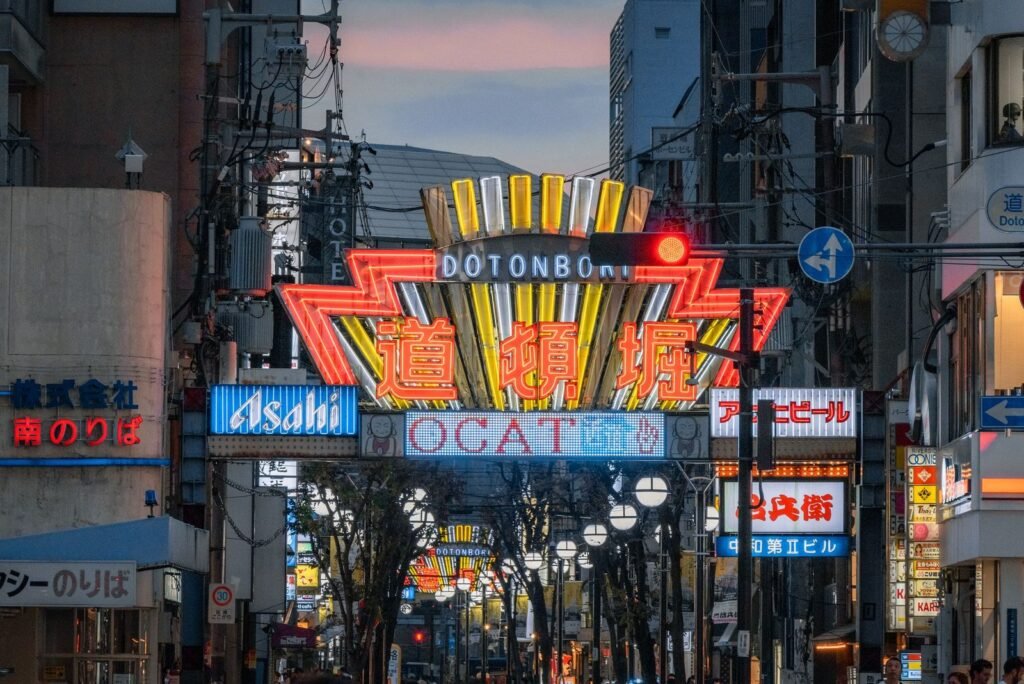
Kansai International Airport (KIX), the main international airport for the Osaka area, sits on an artificial island about 38 km from Osaka Station. Spend the evening in Dotonbori, a canal-side nightlife district known for huge illuminated signboards and the running Glico Man billboard. Osakans say kuidaore, “eat until you collapse”, and okonomiyaki and takoyaki are the local classics.
Day 2: Umeda Sky Building and Osaka Castle
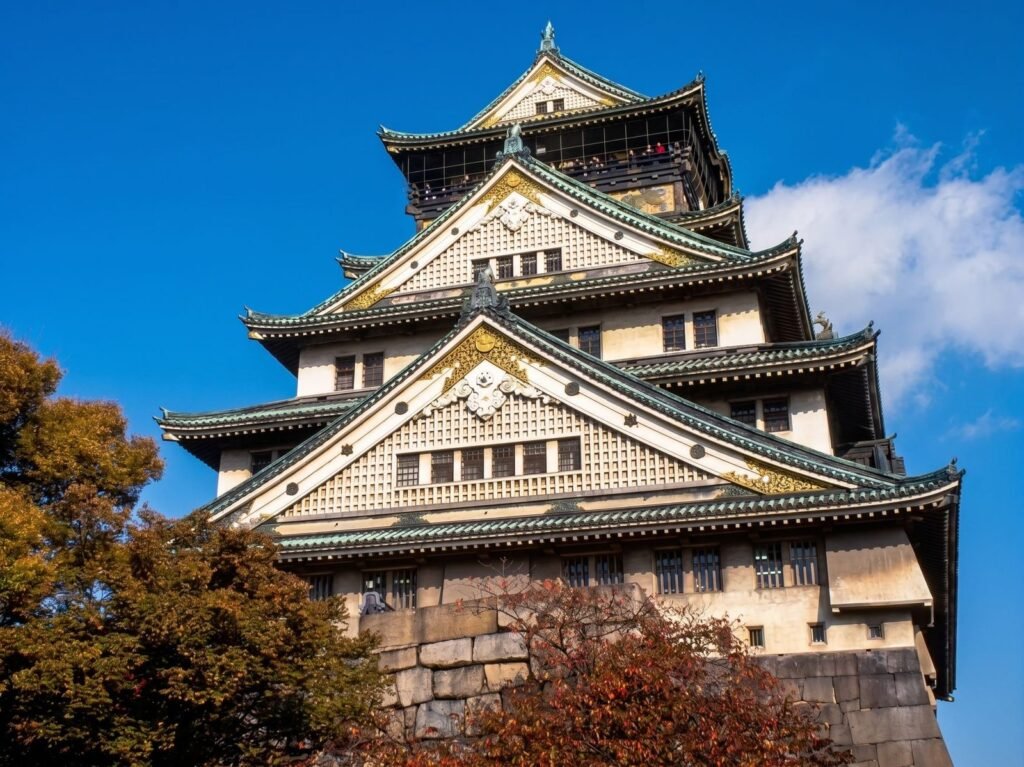
The Umeda Sky Building, completed in 1993, has two towers joined near the top by glass bridges, and a rooftop Floating Garden Observatory. Osaka Castle was begun by Toyotomi Hideyoshi in 1583; today’s keep is a 1931 ferroconcrete reproduction that works as a museum, set in a park ringed by two moats.
Day 3: Universal Studios Japan
Universal Studios Japan opened in 2001 and has ten areas, including the Wizarding World of Harry Potter (2014) and Super Nintendo World (18 March 2021). It had 16 million visitors in 2024, so plan a full day. Popular areas use timed-entry tickets issued through the official USJ app, and rules change, so check the park’s site. Park entry is in the package; a paid Express Pass is a separate product.
Day 4: Nara and Kyoto on One Day Tour
The flyer names a Nara and Kyoto day tour without listing every stop, so these are the best-known highlights, not a fixed list. Kyoto only gets a sampler in a single day.
Nara: deer and the Great Buddha
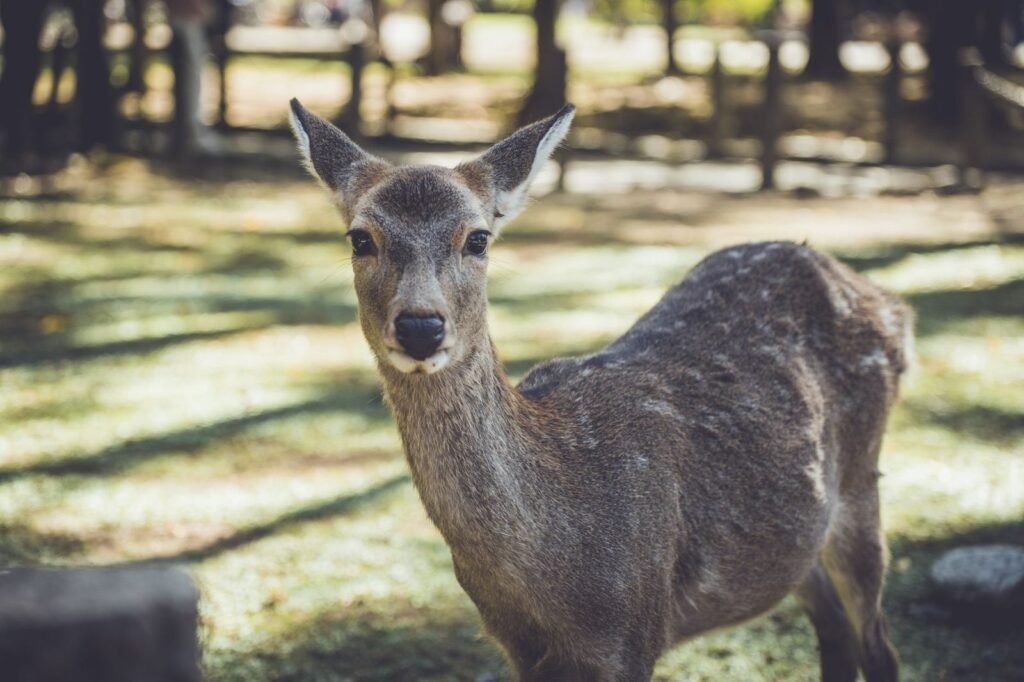
Over 1,200 wild sika deer roam Nara Park. You can buy deer crackers (shika-senbei) to feed them, but city signs remind visitors the deer are wild animals and should not be teased, so keep paper and snacks out of reach. At Todai-ji, the Great Buddha Hall houses the world’s largest bronze statue of the Buddha Vairocana. UNESCO lists Todai-ji and other Nara sites as the Historic Monuments of Ancient Nara (1998).
Kyoto: Fushimi Inari and Kinkaku-ji
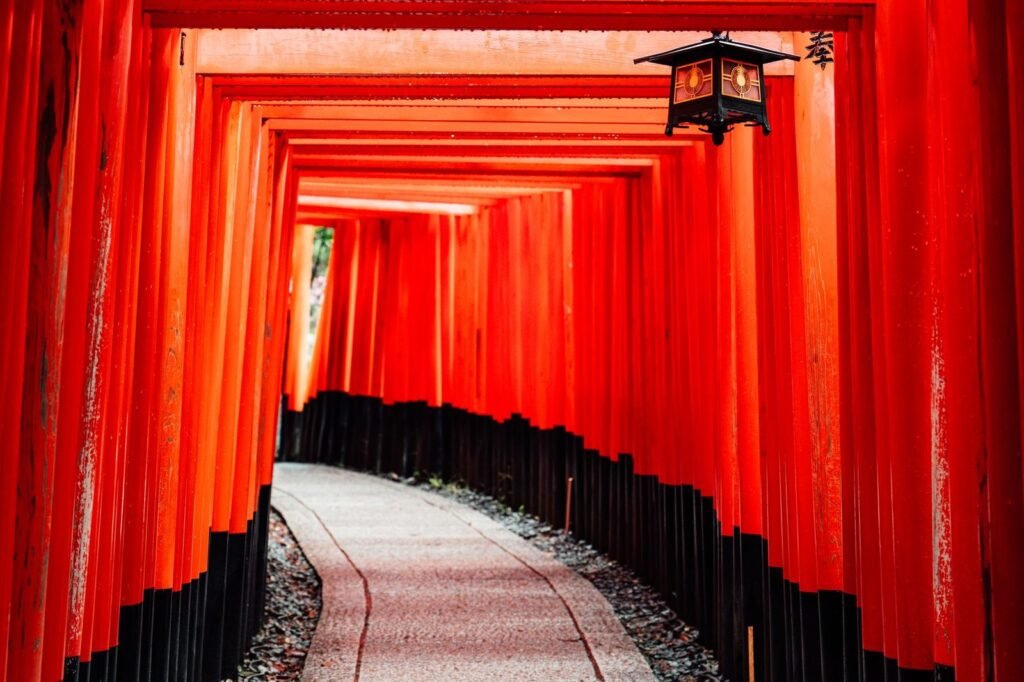
Fushimi Inari-taisha is famous for roughly ten thousand torii gates, about 800 forming the Senbon Torii tunnel. It is open 24 hours, and the 4 km trail up 233-metre Mount Inari takes about two hours to walk up. Kinkaku-ji, the Golden Pavilion, dates to 1397, has its top two floors coated in gold leaf, was destroyed by arson in 1950 and rebuilt in 1955. It is one of the 17 Historic Monuments of Ancient Kyoto that UNESCO listed in 1994.
Days 5–7: Bullet Train, Shibuya, Mt Fuji and DisneySea
Day 5: Osaka to Tokyo, then Shibuya
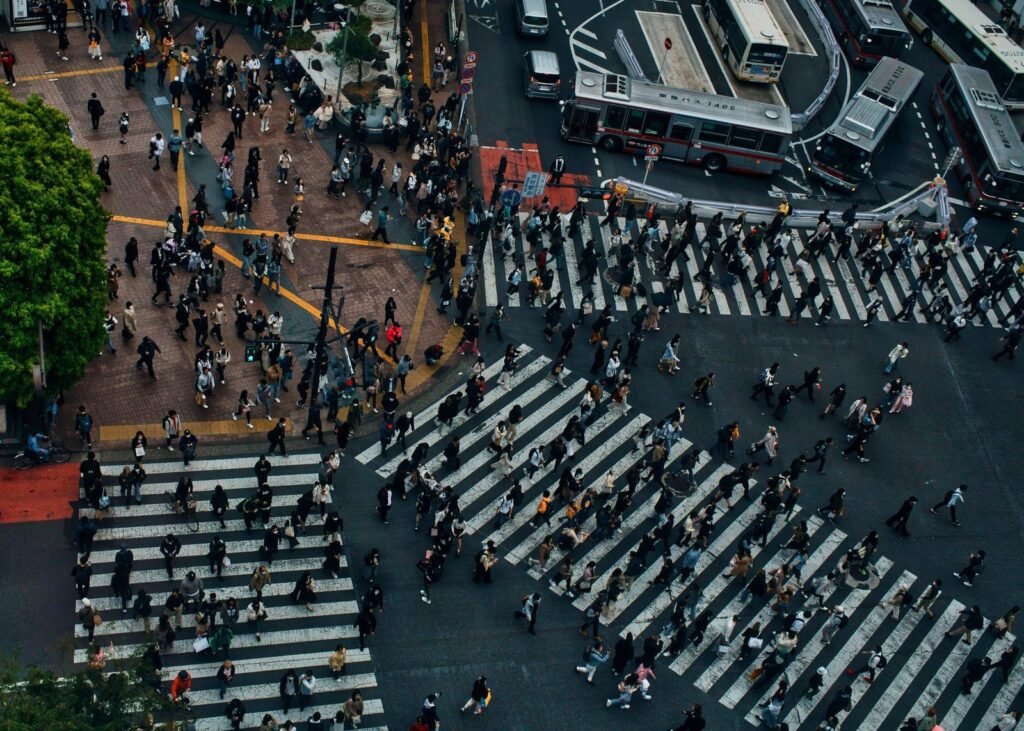
The Osaka–Tokyo ticket is included. On the Tokaido Shinkansen, any bag with overall dimensions of more than 160 cm needs a reserved seat with luggage space, so repack the night before. Then head to Shibuya Crossing, called the world’s busiest pedestrian crossing, with 1,000 to 2,000 people on a single green light. Beside it, SHIBUYA SKY is the rooftop observation deck of Shibuya Scramble Square, a 229.71-metre skyscraper that opened on 1 November 2019.
The go-kart ride needs paperwork. Tours on Tokyo’s public roads typically ask drivers for a valid licence plus an International Driving Permit, and Japan’s motoring association (JAF) says only permits issued under the 1949 Geneva Convention are valid there. Operators set their own rules, so ask us what your group needs well before you travel.
Day 6: Mt Fuji and Hakone
Mt Fuji stands 3,776 metres tall about 100 km south-west of Tokyo and became a UNESCO World Heritage cultural site in 2013. Hakone is a hot-spring town centred on Lake Ashi, where pirate-ship-styled cruise boats take about 25 minutes to cross the lake. The Hakone Ropeway runs from Sounzan to Togendai via Owakudani, whose fumaroles are volcanically active.
No one can promise the Fuji view. JNTO warns that clouds often hide it in the rainy season (early June to mid-July) and says clear winter days are best, and a Hakone tourism guide notes the Owakudani view appears only on a clear day. If Day 6 looks cloudy, we can swap it with Day 8.
Day 7: Tokyo DisneySea
Tokyo DisneySea in Urayasu, Chiba, opened on 4 September 2001 with a nautical theme. Its eighth port of call, Fantasy Springs, opened on 6 June 2024. Park-ticket holders can use the Tokyo Disney Resort app for a free Standby Pass on certain attractions, and a paid Disney Premier Access also exists, so check what is offered on the day. Plan a full day.
Days 8–10: Tokyo Sightseeing, Skytree, teamLab Planets and Departure
Day 8: Tokyo sightseeing
Pick your districts: Chiyoda holds the Imperial Palace and the National Diet Building, Shinjuku is the administrative centre, and Harajuku is a Shibuya ward neighbourhood. This day also works as the weather backup for Fuji.
Day 9: Tokyo Skytree and teamLab Planets
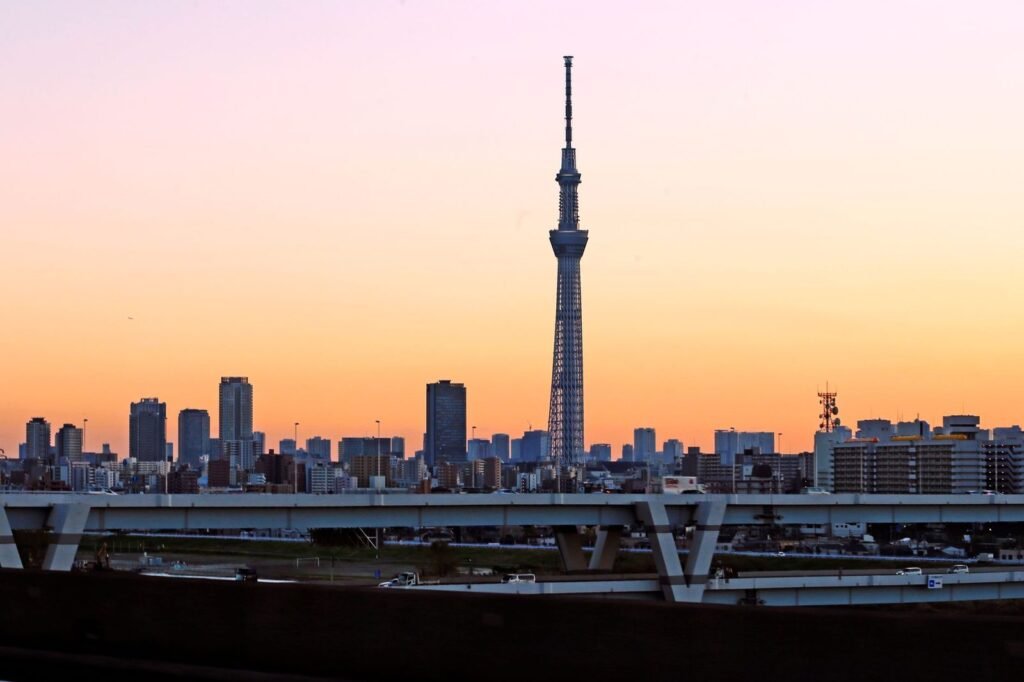
Tokyo Skytree is 634 metres tall, the tallest tower in Japan, with observatories at 350 and 450 metres. teamLab Planets in Toyosu is an immersive digital-art museum. You go barefoot in its Water area, where water can rise to knee height, so wear clothes you can roll up. It is scheduled to run until the end of 2027, so check the official site.
Day 10: departure
Tokyo has two international airports, Haneda and Narita. Confirm which one your flight uses so the car transfer is timed properly.
Best Time for This Route: Weather, Blossom, Autumn Colour and Crowds
Osaka and Tokyo have similar temperatures, so one table covers both. Note that Tokyo’s wettest months are September and October.
| Month | Osaka high / low | Osaka rain | Tokyo high / low | Tokyo rain | BeOnd verdict |
|---|---|---|---|---|---|
| Jan | 9.7 / 3.0°C | 47 mm | 9.8 / 1.2°C | 60 mm | Cold but bright; best Fuji odds |
| Feb | 10.5 / 3.2°C | 61 mm | 10.9 / 2.1°C | 57 mm | Cold; bright in Tokyo |
| Mar | 14.2 / 6.0°C | 103 mm | 14.2 / 5.0°C | 116 mm | Cool; blossom starts late |
| Apr | 19.9 / 10.9°C | 102 mm | 19.4 / 9.8°C | 134 mm | Excellent; blossom, mild days |
| May | 24.9 / 16.0°C | 137 mm | 23.6 / 14.6°C | 140 mm | Very good; avoid Golden Week |
| Jun | 28.0 / 20.3°C | 185 mm | 26.1 / 18.5°C | 168 mm | Rainy season; Fuji often hidden |
| Jul | 31.8 / 24.6°C | 174 mm | 29.9 / 22.4°C | 156 mm | Hot and humid |
| Aug | 33.7 / 25.8°C | 113 mm | 31.3 / 23.5°C | 155 mm | Hottest; Obon crowds |
| Sep | 29.5 / 21.9°C | 153 mm | 27.5 / 20.3°C | 225 mm | Warm; typhoon season |
| Oct | 23.7 / 16.0°C | 136 mm | 22.0 / 14.8°C | 235 mm | Mild; Tokyo’s wettest |
| Nov | 17.8 / 10.2°C | 73 mm | 16.7 / 8.8°C | 96 mm | Excellent; mild, drier, colour |
| Dec | 12.3 / 5.3°C | 56 mm | 12.0 / 3.8°C | 58 mm | Cold, dry; year-end closures |
Source: Osaka and Tokyo (Kitanomaru Park station) climate normals from the Japan Meteorological Agency, tabulated on Wikipedia. All figures are 1991–2020 averages, so individual days vary; rain is rounded to whole millimetres. “BeOnd verdict” is our own judgement for a first-time visitor.
Spring and autumn
JNTO lists the historical-average first-bloom dates as 24 March for Tokyo and 27 March for Osaka, and describes Ueno Park as a sea of pink in late March and early April. Dates move year to year, so check JNTO’s forecast, and pack a warm layer: March temperatures can drop suddenly. For autumn, JNTO says leaves turn from mid-November to early December; its 2026 forecast listed an average-year peak of 28 November for Tokyo and 1 December for Osaka. Indian Diwali-break travel, usually in October or November, suits later November best.
Rainy season and typhoons
The rainy season, tsuyu, runs from about 7 June to 20 July in Kansai and Kanto, and five or six typhoons pass over or near Japan from early August to early October. Indian school summer holidays usually fall in May and June, so late May is the calmer choice.
Crowds and closures
- Golden Week (29 April to 5 May): one of Japan’s busiest travel periods, with packed trains and hotels; the second half of May is calmer.
- Obon (mid-August): a family holiday when many people travel to their home towns.
- New Year (late December to early January): many businesses close for several days and shrines are extremely busy.
- Bullet-train seats: in recent years Nozomi trains have run with reserved seats only in all three periods, so book early.
Our pick: late March to early April for blossom, or mid-November to early December for colour. For the best chance of a clear Fuji, winter is better, if you can handle cold mornings.
Is 10 Days Enough for Japan?
For a first visit built around Osaka, Kyoto, Nara, Fuji and Tokyo, yes, with caveats. Nine nights give about eight full days once arrival and departure are allowed for, and two of those are theme parks. If that is not your family’s taste, ask us whether a park day can be swapped for more time in Kyoto, whose area has 17 UNESCO-listed locations. Hakone fits into a single day here, while JNTO’s two-week route spends a night there, and Hiroshima is not covered at all. Looking at other destinations instead? See our international tour packages.
Visa, Time Difference and Practical Tips for Indian Travellers
- Visa. Indian passport holders need a visa for tourism. Japan’s eVISA system began in India on 1 April 2024 for single-entry short-term tourist visas, handled through the Japan Visa Application Centres run by VFS Global. The embassy describes it as a tourist visa for a stay of up to 90 days, and the issued eVISA must be shown as a “visa issuance notice” on a mobile device at the airport; the embassy says PDFs, photos, screenshots and printed copies are not accepted. Fees, timings and eligibility change, so check the MOFA eVISA page and the Embassy of Japan in India before applying.
- Time difference. Japan is on UTC+9 and India on UTC+5:30, so Japan is 3 hours 30 minutes ahead all year; neither uses daylight saving. 9 a.m. in Delhi is 12:30 p.m. in Tokyo.
- Money. The currency is the yen. Cash is still needed in many places, and rural areas and some hotels may be cash-only. International-brand cards are generally accepted, and Japan Post Bank and Seven Bank ATMs dispense cash. Overseas phone-payment apps sometimes fail, and Suica and Pasmo transit cards can only be bought and topped up with cash at ticket machines.
- Power. Japan uses 100 V and two-flat-pin Type A plugs, with 50 Hz in the east including Tokyo and 60 Hz in the west including Osaka and Kyoto. Dual-voltage chargers work anywhere; other Indian appliances may need a step-down transformer.
- Vegetarian food. Dashi (fish stock) and bonito flakes hide in many soups, sauces and vegetable dishes. JNTO advises being specific about what you cannot eat and carrying a written card in Japanese. Tell our team your group’s food needs early.
Frequently Asked Questions
What is the best 10-day Japan itinerary for first-timers?
A popular first-timer line is Osaka, a Nara and Kyoto day trip, the Shinkansen to Tokyo, then Mt Fuji and Hakone and a theme-park or skyline day in Tokyo. Four nights around Osaka, five in Tokyo and a departure day fit 10 days.
How do you travel from Osaka to Tokyo?
By the Tokaido Shinkansen, run by JR Central. The fastest Nozomi trains cover the 515 km in 2 hours 21 minutes, and JNTO gives the usual journey as about 2.5 hours. Reserve seats in advance, especially in Golden Week, Obon and New Year.
Do Indians need a visa for Japan?
Yes, Indian passport holders need a visa for tourism. Japan’s eVISA system has accepted applications from India since 1 April 2024 for single-entry short stays, handled through VFS Global. Fees, timings and eligibility change, so check the MOFA eVISA page and the Embassy of Japan in India.
What is the best month to visit Osaka and Tokyo?
Late March to early April for cherry blossom and mid-November to early December for autumn colour are the classic windows. November is mild and drier than October, June brings the rainy season, and August is the hottest month.
Is 10 days enough for Japan?
It is enough for a first visit covering Osaka, Nara, Kyoto, Mt Fuji, Hakone and Tokyo, with about eight full days once arrival and departure are allowed for. It does not cover Hiroshima or a slow stay in Kyoto or Hakone.
What is the time difference between India and Japan, and do I need an adapter?
Japan is 3 hours 30 minutes ahead of India all year, as neither country uses daylight saving. Japan uses 100 V and Type A two-flat-pin sockets, so bring a plug adapter and check whether your chargers are dual-voltage.
Helpful Official Resources
Getting there: Kansai International Airport serves Osaka, about 38 km from Osaka Station, and Tokyo has Haneda and Narita. Japan is 3 hours 30 minutes ahead of India, and the bullet train links Osaka and Tokyo in roughly 2.5 hours.
- Japan National Tourism Organization (JNTO) — the official tourism portal for destinations, seasons and travel tips
- Ministry of Foreign Affairs of Japan — JAPAN eVISA — the official page for the eVISA system
- Embassy of Japan in India — visa information for Indian applicants
- JNTO cherry blossom forecast — average first-bloom dates and the current forecast
- JNTO autumn leaves forecast — peak colour dates by city
- JR Central (English) — operator of the Tokaido Shinkansen
- Universal Studios Japan — the official park site for tickets and hours
- teamLab Planets TOKYO — the official site, including exhibition dates
- Tokaido Shinkansen — Wikipedia — history, services and frequency
- Osaka — Wikidata — structured reference data
- Tokyo — Wikidata — structured reference data
- Osaka on Google Maps — attractions, distances and directions
Ready to Turn This Guide Into a Trip?
Tell us your dates and budget — we’ll handle everything else.