Best Time to Visit Vietnam: Region by Region, Month by Month
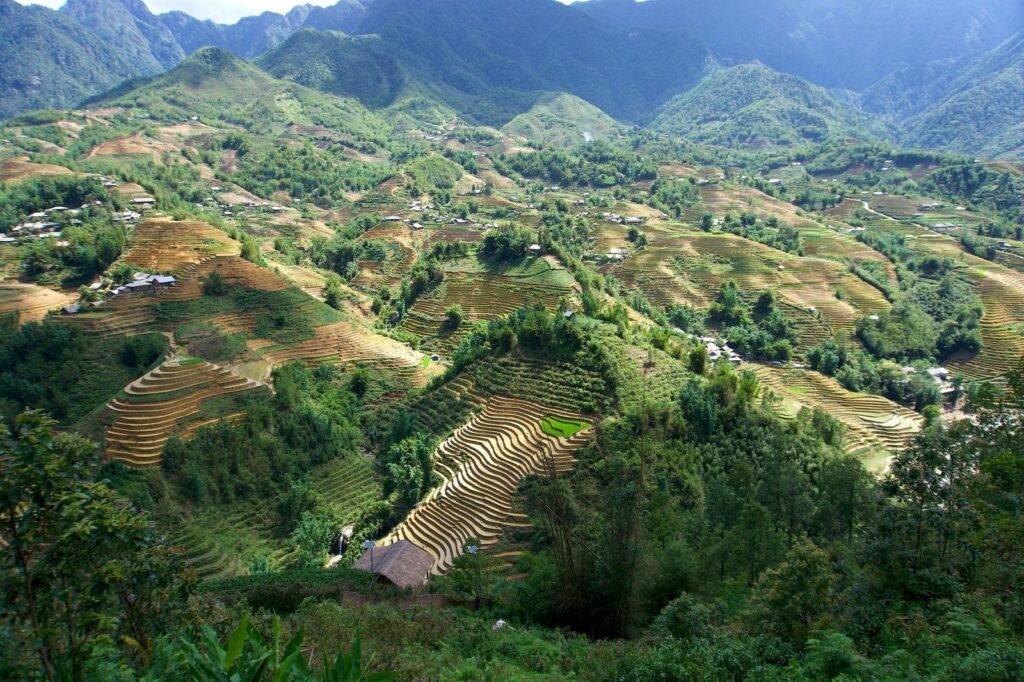
Table of Contents
The best time to visit Vietnam depends on where you are going, because the country is long and thin and has three very different climates. Da Nang lies about 764 km south of Hanoi and 964 km north of Ho Chi Minh City. In February, Hanoi can be cool and grey, with only about 45 hours of sunshine all month, while Ho Chi Minh City gets about 246 hours of sun and just 8 mm of rain. Pick the region first, then the month.
Quick answer: the best overall time to visit Vietnam is March to May, and April is the easiest month for a north-to-south trip. By region, the north is best in April–June and September–November, the centre from February to August, and the south from December to April; Phu Quoc is at its best in December–January. Avoid the central coast in October and November, when it floods, and expect Tet on 6 February 2027.
This guide covers the North (Hanoi, Ha Long Bay, Sa Pa, Ninh Binh), the Centre (Da Nang, Hoi An, Hue) and the South (Ho Chi Minh City, the Mekong Delta, Phu Quoc), plus Tet 2027, the central-coast flood season that overlaps Diwali, and the e-visa for Indian travellers.
Last updated 25 November 2026. Weather figures are averages from Wikipedia weather boxes; seasonal advice comes from Vietnam’s national tourism authority and is attributed where it appears.
BeOnd tip: Vietnam’s national tourism authority says March to May offers the best weather countrywide. For the north, centre and south in one trip, build around those months.
The Short Answer: Region First, Then Month
Vietnam has a monsoon climate. According to Wikipedia’s Climate of Vietnam, the north has four seasons while the centre and south have two, rainy and dry. The tourism authority’s advice:
| Region | Best months | Think twice about |
|---|---|---|
| North: Hanoi, Ha Long Bay, Sa Pa, Ninh Binh | April–June, September–November | June–August (stormy, humid); December–March (cool, misty) |
| Centre: Da Nang, Hoi An, Hue | February–August (March excellent in Hoi An) | September–January: rain, storms from September, floods possible September–November |
| South: Ho Chi Minh City, Mekong Delta | December–April | May–November: daily afternoon downpour |
| Phu Quoc island | October–June, ideal December–January | July–September: stormy, ferries can be dangerous |
Source: Vietnam National Authority of Tourism (vietnam.travel), weather and climate page.
The centre surprises people: its rainy season is the autumn. Wikipedia describes the central coast’s rains as starting around August–September, peaking in October–November and ending around December, while the north and south are wettest in summer.
Month by month: Hanoi, Da Nang and Ho Chi Minh City
| Month | Hanoi (North) | Da Nang (Centre) | Ho Chi Minh City (South) |
|---|---|---|---|
| Jan | 20.2°C, 20 mm | 25.0°C, 82 mm | 32.0°C, 12 mm |
| Feb | 21.7°C, 20 mm | 26.2°C, 24 mm | 32.7°C, 8 mm |
| Mar | 25.9°C, 36 mm | 28.3°C, 25 mm | 33.6°C, 18 mm |
| Apr | 28.5°C, 104 mm | 31.0°C, 35 mm | 34.5°C, 57 mm |
| May | 32.8°C, 165 mm | 33.3°C, 81 mm | 34.9°C, 202 mm |
| Jun | 34.9°C, 264 mm | 34.5°C, 83 mm | 33.5°C, 224 mm |
| Jul | 33.7°C, 254 mm | 34.4°C, 92 mm | 33.0°C, 231 mm |
| Aug | 33.2°C, 274 mm | 33.9°C, 141 mm | 32.9°C, 219 mm |
| Sep | 31.9°C, 228 mm | 31.8°C, 351 mm | 32.6°C, 490 mm |
| Oct | 30.4°C, 155 mm | 29.5°C, 628 mm | 32.3°C, 340 mm |
| Nov | 26.7°C, 61 mm | 27.4°C, 448 mm | 32.4°C, 128 mm |
| Dec | 21.3°C, 20 mm | 25.1°C, 218 mm | 31.6°C, 41 mm |
Average daily high and average monthly rain, from the Wikipedia weather boxes, which cite the Vietnam Institute for Building Science and Technology. Hanoi’s box is labelled 1991–2020 normals; the Da Nang and Ho Chi Minh City boxes do not state an averaging period. These are averages — individual days vary.
North Vietnam: Hanoi, Ha Long Bay, Sa Pa and Ninh Binh
The north is the only region with four seasons, including a real winter. In winter, cold fronts reach it three or four times a month and can cut temperatures by 4–5°C, according to Climate of Vietnam, so pack a proper warm layer for January.
Hanoi: spring and autumn are the sweet spots
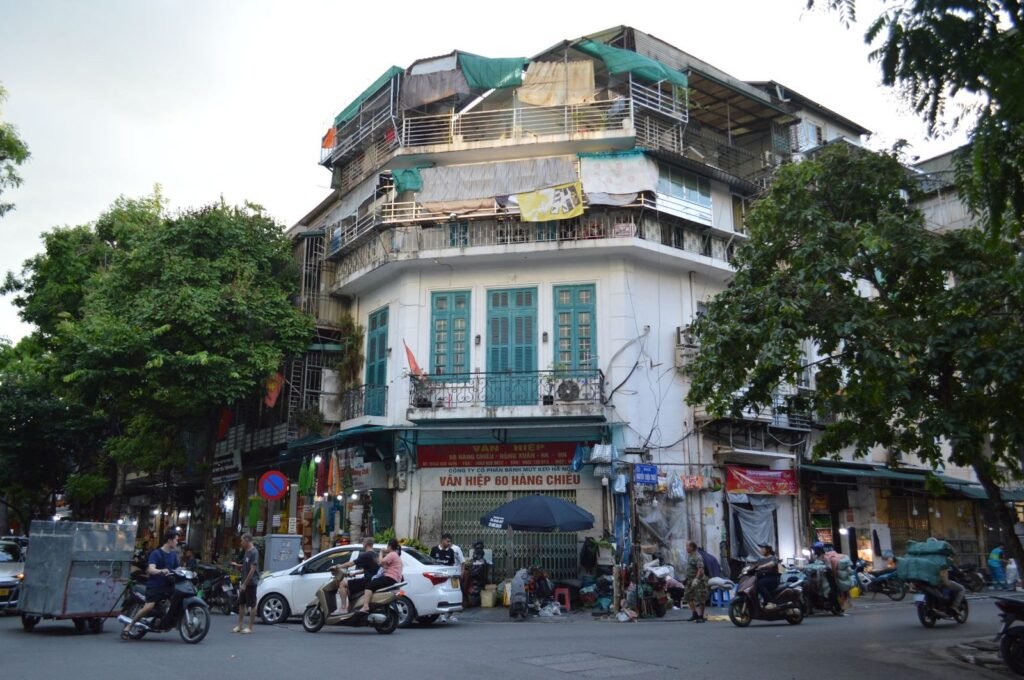
The tourism authority recommends April to June or September to December. The data agree: June to August brings highs of 33–35°C and 250–275 mm of rain a month, while October and November bring about 30°C and 27°C with less rain (155 mm and 61 mm). January to March have small rain totals but 10 to 16 wet days a month. Our pick for the Old Quarter and the food scene is late October to November.
Ha Long Bay: when to book the cruise
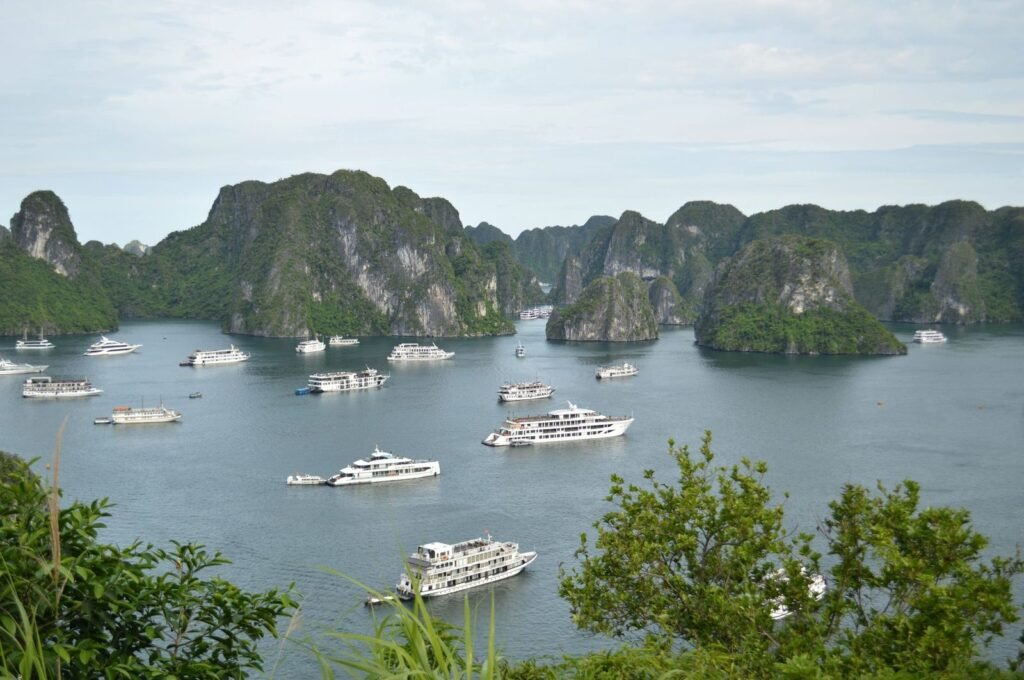
UNESCO-listed in 1994, with close to 2,000 islets according to Wikipedia, Ha Long Bay is best in April–June or September–November, says the tourism authority. December to March is cool to cold, misty and cloudy (January can be frigid), June to August is stormy and humid, and tropical storms can cancel cruises. They do: when Typhoon Wipha approached in July 2025, Quang Ninh province suspended tourist boats and boat permits in the bay, VietNamNet reported. For a June–September cruise, ask what happens if a storm closes the bay.
BeOnd’s Vietnam tour package is 6 nights / 7 days with a Ha Long cruise stay, so these windows matter for it.
Sa Pa: green, golden or misty
About 300 km north-west of Hanoi, Sa Pa (often spelled Sapa) is where the seasons are easiest to see. The tourism authority describes December to March as chilly and misty (occasional January snow), April to June as warm and clear, June to August as stormy and humid, and September to November as cool, clear and dry. It singles out late April, when flowers bloom, and early October, when the tiered rice paddies turn golden just before harvest. A 2022 VietNamNet report put the start of ripening in the Muong Hoa valley at mid-August to early September; the peak shifts each year, so check recent reports. The green summer terraces come with Sa Pa’s wettest weather: Wikipedia says flooding is most likely from June to early September.
Ninh Binh: Trang An and Tam Coc
The Trang An landscape was inscribed by UNESCO in 2014. The rice at Tam Coc turns golden in May and typically lasts to mid-June, VietNamNet reported in 2020, when Hanoi’s highs are about 33–35°C. Wikipedia notes the Trang An boats have no shade, so start early and carry a hat.

Central Vietnam: Da Nang, Hoi An and Hue (Mind the Autumn Rains)
The centre is Vietnam’s beach-and-heritage belt: mostly dry and increasingly hot from February to August, then drenched in autumn.
The storm and flood season (September to December)
Da Nang gets about 25 mm of rain in March but 628 mm in October and 448 mm in November, on about 20 wet days each; Hue’s weather box on Wikipedia is wetter still. The tourism authority says tropical storms hit Central Vietnam hard from September and that Hue can flood between September and November.
In late October 2025, Tuoi Tre News reported the Thu Bon River rising beyond historic levels, with locals comparing it to the great flood of 1964 and many areas of Hoi An ward, where the ancient town stands, under 2–3 metres of water. That was an extreme year, not an annual certainty, but October and November are when it happens. If your dates are fixed then, including the Diwali break (29 October in 2027), build around the north and south and keep Hoi An nights flexible.
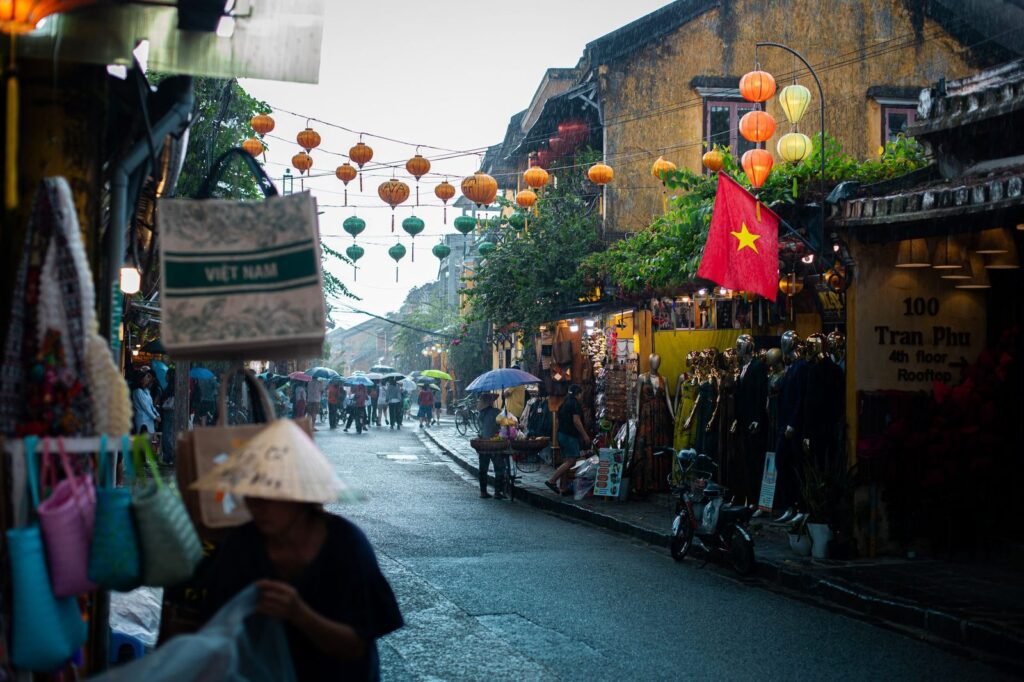
Hoi An’s full-moon lantern nights
VietNamNet and Vietnam Airlines’ travel guide both describe a lantern night on the 14th day of each lunar month, around the full moon, when the Old Town switches off its electric lights and keeps motor vehicles out, leaving lanterns and candles to light the streets. The date follows the lunar calendar and travel sites do not always agree on it, so confirm it before fixing your Hoi An nights.
Beaches, the Golden Bridge and Hue
The tourism authority lists February to August as warm to hot and sunny in Hoi An (March is excellent), and Da Nang averages highs of 33–34.5°C in May–July with roughly 240–250 hours of sunshine a month. The 150-metre Golden Bridge, held up by giant stone-style hands, opened in June 2018 in the Ba Na Hills resort, where Wikipedia gives a peak of 1,487 m and an average temperature around 20°C. Hue’s UNESCO-listed monuments (inscribed 1993) see warm to hot, sunny weather from March to August and cool, rainy weather from September to February, says the tourism authority.

South Vietnam: Ho Chi Minh City, the Mekong Delta and Phu Quoc
The south has the simplest weather. Wikipedia describes Ho Chi Minh City’s rainy season as May to November and its dry season as December to April, and average highs stay between 31.6°C and 34.9°C all year. From May to November the tourism authority describes a dependable afternoon downpour, usually lasting a few hours, so plan sights for the morning. September is the wettest month (490 mm) and February the driest (8 mm).
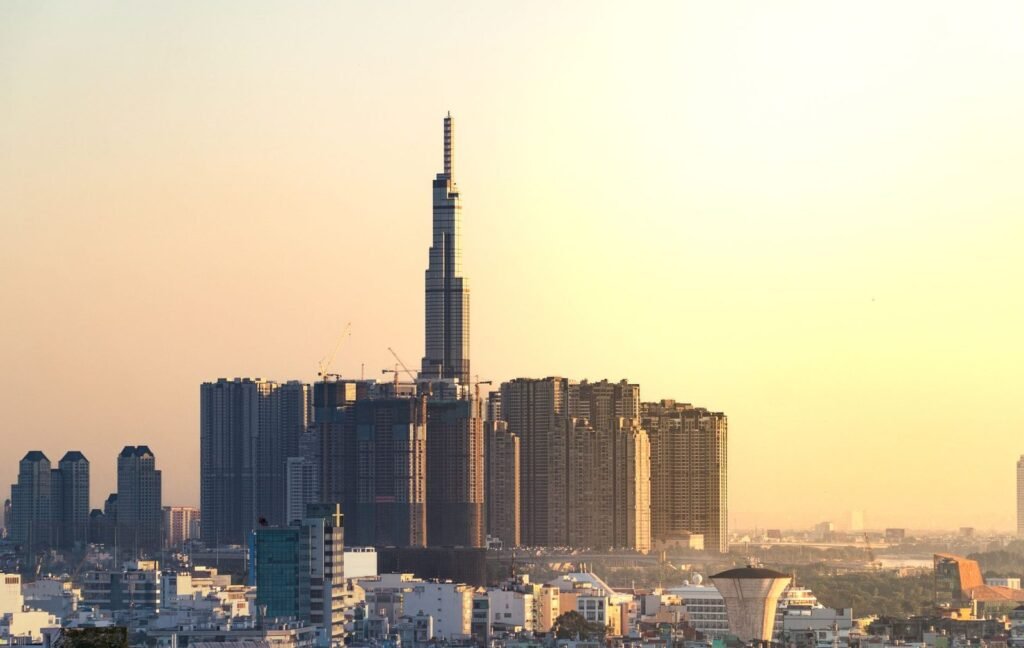
The Mekong Delta
The tourism authority groups the Mekong Delta with Ho Chi Minh City: sporadic rain from May to November, clear and sunny from December to April. Can Tho, home to the Cai Rang floating market, is roughly 170 km from the city, three to four hours by road according to Wikipedia, so allow an overnight stay.
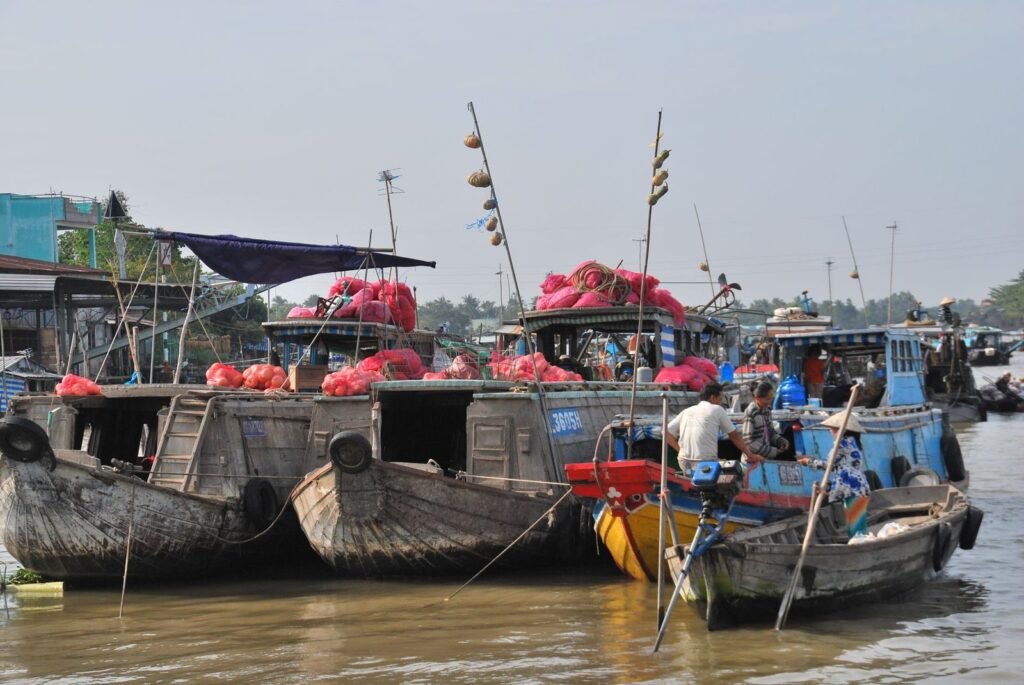
Phu Quoc: the island on its own calendar
This Gulf of Thailand island is at its best in December and January, says the tourism authority, which lists October to June as hot, sunny and clear and warns that July to September is stormy, with ferry travel potentially dangerous. Wikipedia’s table shows 27–61 mm of rain a month from January to March against 486 mm in August, so December to March is the safest beach window.
Tet 2027: What Lunar New Year Does to a Vietnam Trip
Tet usually falls between late January and 20 February. In 2027 it falls on Saturday 6 February, eleven days earlier than in 2026, according to Wikipedia. VnExpress reported in October 2026 that the government has approved a seven-day break for public employees from 4 to 10 February 2027; private employers set their own schedules.
Tet is a holiday for locals, not tourists. A VnExpress report from Tet 2025 described many businesses closing, including Hoi An tailor shops and many local restaurants; ride-hailing drivers and intercity buses took a break. Closures vary by city. Demand shifts too: Wikipedia notes that families travel to ancestral homes before New Year’s Eve, and in 2025 Vietnamese press reported economy fares on many domestic Tet flights almost sold out, with travel agencies saying fares were up 10–15% on 2024.
If you go, keep plans simple with one base city, book internal flights early and confirm any restaurant or tailor you are counting on. For everything open and flexible transport, travel in late February or March instead.
Vietnam Month by Month: What Each Month Is Really Like
The tables above give the numbers; this is the plain-English version, one month at a time. Temperatures are average daily highs and rainfall is the monthly average for Hanoi, Da Nang and Ho Chi Minh City from the same weather boxes.
January in Vietnam
Cool and grey in Hanoi (average high 20.2°C, with winter cold fronts that can cut temperatures by 4–5°C) and chilly in Sa Pa, where snow is occasional. Da Nang is showery (82 mm), while Ho Chi Minh City is hot and dry (32.0°C, 12 mm) and Phu Quoc is at its best. Best for the south and Phu Quoc; pack layers for the north.
February in Vietnam
The greyest month in Hanoi (21.7°C and only about 45 hours of sunshine), while Ho Chi Minh City is at its driest (8 mm, about 246 hours of sun). Da Nang is mild and drying out (26.2°C, 24 mm). Tet falls on 6 February in 2027, so book early and expect closures; Responsible Travel lists the Perfume Pagoda pilgrimage season from mid-February to mid-March. Best for the south, and for the centre once Tet is over.
March in Vietnam
A very good month. Hanoi warms to 25.9°C with drizzle (36 mm), Hoi An is excellent according to the tourism authority, Da Nang is 28.3°C with 25 mm and Ho Chi Minh City is hot and dry (33.6°C, 18 mm). Best for first trips and Hoi An.
April in Vietnam
Our best all-rounder. Hanoi is 28.5°C (104 mm), Da Nang 31.0°C with only 35 mm, and Ho Chi Minh City 34.5°C with the rains still a few weeks away. Ha Long Bay cruises and the late-April flowers of Sa Pa are both in season. The 30 April and 1 May holidays bring domestic crowds. Best for north-to-south trips.
May in Vietnam
Hot and increasingly wet in the north (Hanoi 32.8°C, 165 mm), and the south’s rains arrive (Ho Chi Minh City 202 mm). The centre is sunny (Da Nang 33.3°C, 81 mm), and the Tam Coc rice fields in Ninh Binh turn golden. Best for Da Nang and Hoi An; it overlaps Indian summer holidays.
June in Vietnam
Hot everywhere. Hanoi’s average high peaks at 34.9°C with 264 mm of rain, and the tourism authority calls June to August stormy and humid in the north. Da Nang (34.5°C, 83 mm) and Hoi An are still sunny. Best for the central beaches; keep the north flexible.
July in Vietnam
Much like June: Hanoi 33.7°C and 254 mm, Da Nang 34.4°C and 92 mm. Phu Quoc is stormy from July to September, with ferries potentially dangerous, and tropical storms can close Ha Long Bay: boats were suspended ahead of Typhoon Wipha in July 2025. Best for Da Nang and Hoi An.
August in Vietnam
The north is at its wettest (Hanoi 274 mm), Ho Chi Minh City gets 219 mm and the centre’s rain starts to build (Da Nang 141 mm). Sa Pa’s terraces begin to ripen from mid-August to early September, according to a 2022 VietNamNet report, but flooding there is most likely until early September. A flexible month: plan around the weather forecast.
September in Vietnam
The hardest month for a full route. Ho Chi Minh City has its wettest month (490 mm), Da Nang jumps to 351 mm as storms reach the centre, and Hue can flood from September. The north eases (Hanoi 31.9°C, 228 mm), Ha Long Bay and Sa Pa are back in season, and 2 September is National Day, a public holiday. Best for Hanoi, Ha Long Bay and Sa Pa.
October in Vietnam
Hanoi is at its best (30.4°C, 155 mm and drying out) and Sa Pa’s paddies turn golden in early October. Da Nang, however, gets 628 mm, its wettest month, and Hue and Hoi An can flood. Phu Quoc is back in season. Diwali falls in this window in 2027 (29 October), so favour the north and south. Best for Hanoi, Sa Pa and the south.
November in Vietnam
Hanoi is cool and dry (26.7°C, 61 mm), the south’s rains ease (Ho Chi Minh City 128 mm) and Ha Long Bay is in season, but the centre is still wet (Da Nang 448 mm). Best for Hanoi, Ha Long Bay and the south; keep the centre optional.
December in Vietnam
Cool and dry in Hanoi (21.3°C, 20 mm), dry in Ho Chi Minh City (31.6°C, 41 mm) and at its best on Phu Quoc, while Da Nang is still wet (218 mm). Christmas and New Year are busy: Flamingo Transworld, an Indian tour operator, says crowds and hotel prices rise further then. Best for the south and Phu Quoc, with the north as a cool add-on.
Peak, Shoulder and Low Season: Crowds, Prices and Public Holidays
Weather is only half the picture, because demand sets crowds and prices. Operators label the seasons differently by region. Selective Asia calls November to April (north and south) and February to June (centre) the best time to go, May to October (north and south) the shoulder season, and October to November in the centre the low season, and argues that avoiding the peak months means fewer crowds and better availability. Flamingo Transworld, an Indian operator, says Christmas, New Year and Tet push crowds and hotel prices higher still.
Public holidays move the crowds too. According to Wikipedia, Vietnam has 13 public holidays a year, including Reunification Day (30 April), International Labour Day (1 May) and National Day (2 September), and a holiday that falls on a weekend is observed on the following Monday. Responsible Travel notes that many Vietnamese families travel around 30 April and 1 May.
BeOnd tip: Book flights and hotels as early as you can for Tet, 30 April–1 May, 2 September and the Christmas–New Year weeks, when demand is highest. The wet-season months can cost less in popular places but bring the storms and floods described above, so a lower price is not always a saving.
Beyond the Classic Route: Nha Trang, Da Lat and Ha Giang
Nha Trang: the sunniest beach city
The tourism authority lists January to August as hot, sunny and clear and September to December as cool, rainy and cloudy, and says Nha Trang gets more than 300 days of sunshine a year, with the shortest rainy season in the country. Selective Asia puts the rainy season at October to early December, with almost half the annual rainfall in October and November. Best for beaches from January to August.
Da Lat: the cool highlands
The tourism authority describes November to May as cool to cold, dry and clear, and April to October as rainy, warm to hot and cloudy. Selective Asia notes that December and January can be cold. It is the place to escape the heat of the cities in the dry months.
Ha Giang: dry months only
Selective Asia recommends October to April for the north-east around Ha Giang, although December and January can be very cold, and advises avoiding the rainy season from May to September.
Combining Vietnam with Cambodia: December to April
Siem Reap has a wet season from May to October and a dry season for the remaining six months, according to Wikipedia, and its average highs never fall below 30°C. That lines up with the south of Vietnam, which is dry from December to April, so December to April is the window when both are dry. If you add Hanoi or Ha Long Bay in January or February, pack layers for the cooler north.
Best Time to Visit Vietnam by Type of Trip
- First-timers: March to May, with April our pick. Hanoi averages a 28.5°C high, Da Nang 31.0°C with only 35 mm of rain, and Ho Chi Minh City’s heavy rains have not yet arrived.
- Honeymoons: Hoi An in March with a full-moon lantern night, a Ha Long cruise in April–June or September–November, and Phu Quoc in December–January. See our honeymoon packages.
- Families and school holidays: May–June suits the central beaches but is hot in Hanoi (33–35°C in May and June). Diwali (29 October 2027) falls in the central flood window, so favour the north and south. In the late-December break Hanoi is cool but dry, the centre is wet, and Phu Quoc and Ho Chi Minh City are at their best.
- Beach lovers: Da Nang and Hoi An from February to August, Phu Quoc from December to March.
- Culture, food and photography: Hanoi from September to December, Hue from March to August, and Sa Pa in late April or early October.
Which Month for Which Itinerary? The Classic North-to-South Route
The classic route runs Hanoi, Ha Long Bay and Ninh Binh, then Da Nang, Hoi An and Hue, then Ho Chi Minh City and the Mekong Delta. With the north best in April–June and September–November, the centre in February–August and the south in December–April, the overlap is small: March to May, with April the cleanest.
| Month | North | Centre | South | BeOnd verdict |
|---|---|---|---|---|
| Jan | Cool, grey | Mild, showery | Dry, hot | Good; layers for the north |
| Feb | Cool, greyest | Dry, mild | Driest | Good; Tet starts 6 Feb 2027 |
| Mar | Mild, drizzly | Excellent | Dry, sunniest | Very good |
| Apr | Warm, brightening | Excellent | Hot; rains close | Best all-rounder |
| May | Hot, sunnier | Hot, sunny | Rains arrive | Very good, but hot |
| Jun–Aug | Hot, wet, stormy | Hot, sunny; rain builds in Aug | Rainy season | Centre shines; keep north flexible |
| Sep | Rain easing | Storm risk rising | Wettest month | Hardest month for the full route |
| Oct–Nov | Hanoi at its best | Wettest; flood risk | Rain easing | North and south; centre optional |
| Dec | Cool, dry | Wet, cooler | Dry | North and south, plus Phu Quoc |
Descriptions follow the tables above and the tourism authority’s seasonal guide. “BeOnd verdict” is our own judgement.
BeOnd’s Vietnam package is 6 nights / 7 days with a Ha Long cruise stay, so the northern-season advice applies directly; ask us for the day-by-day plan. For a longer Asia trip, see our international tour packages.
Best Time to Visit Vietnam from India: Fitting Your Holidays to the Weather
Most Indian trips are built around a school break or a festival, so here is how the usual windows fit Vietnam’s regions:
- Summer holidays (May–June): the central beaches are the best choice (Da Nang 33–34.5°C with 81–83 mm of rain). Hanoi is hot and wet (33–35°C, 165–264 mm) and the south’s rains begin.
- Diwali (October or November): in 2027 it falls on 29 October, in the central flood window. Choose Hanoi, Ha Long Bay and Sa Pa, or the south and Phu Quoc, and keep any Hoi An nights flexible.
- Christmas and New Year: Hanoi is cool and dry, Ho Chi Minh City and Phu Quoc are at their best, and the centre is wet. It is also the busiest and most expensive period, so book early.
- March–April: the centre and south are dry and the north is warming up (Hanoi 25.9–28.5°C), and the tourism authority’s best months for the whole country start in March.
Hanoi and Ho Chi Minh City are the usual entry points from India. Vietnam Airlines’ India page lists fares from Delhi and Mumbai to cities including Hanoi, Ho Chi Minh City, Da Nang and Phu Quoc, but whether a particular flight is non-stop or connecting varies by route and date, so check the itinerary before you book. See the practical tips below for visa, time difference and the Air India non-stop service.
Visa, Time Difference and Practical Tips for Indian Travellers
- Visa. India is not in the visa-exemption lists on the tourism authority’s visa page, so plan on getting a visa. Citizens of all countries can apply for an e-visa online (since 15 August 2023); the official portal is evisa.gov.vn, and the authority warns against unofficial agencies. At the time of writing, the Vietnam Immigration Department’s e-visa page lists USD 25 for a single-entry e-visa and USD 50 for multiple entry, processed in 3 working days. Fees, validity and timings change, so confirm on the portal.
- Passport and entry point. The tourism authority says your passport must be valid for at least six months beyond your date of entry, with two blank pages. The e-visa approval names the port of entry, so for a north-to-south trip choose matching arrival and departure airports.
- Time difference. Vietnam is on UTC+7 and India on UTC+5:30, so Vietnam is 1.5 hours ahead: 9:00 a.m. in Delhi is 10:30 a.m. in Hanoi. Neither uses daylight saving time.
- Flights. Vietnamese state media reported in March 2026 that Air India planned non-stop Delhi–Hanoi flights from 1 May 2026, alongside its Delhi–Ho Chi Minh City service. Schedules change, so check current airline timetables.
- Currency and power. The currency is the Vietnamese dong (VND). Mains power is 220 V at 50 Hz and most household sockets accept type A and C plugs, so carry a universal adapter.
Getting Between Places: Distances, Drive Times and Map Links
Vietnam is long, so travellers usually fly between the north, centre and south and then use roads inside each region. These are the common road legs within each region.
| From | To | Mode | Distance and time | Map |
|---|---|---|---|---|
| Hanoi | Ha Long Bay (Ha Long city) | Road | 161 km, about 1 h 55 min | Directions |
| Hanoi | Ninh Binh (Trang An) | Road | 98 km, about 1 h 35 min | Directions |
| Hanoi | Sa Pa | Road | 316 km, about 4 h 15 min | Directions |
| Da Nang | Hoi An | Road | 34 km, about 35 min | Directions |
| Da Nang | Hue | Road | 94 km, about 1 h 25 min | Directions |
Distances and times are approximate, calculated from OpenStreetMap road data without traffic, weather or stops, and mountain roads, rain and crowds can add a lot of time. The Directions links open Google Maps with live conditions.
Frequently Asked Questions
What is the best month to visit Vietnam overall?
Vietnam’s tourism authority says March to May offers the best weather countrywide. April is our pick for a north-to-south trip: Hanoi averages a 28.5°C high and Da Nang gets about 35 mm of rain.
When is the best time for a Ha Long Bay cruise?
April to June or September to November, according to the tourism authority. December to March is cool and misty, June to August is stormy, and storms can cancel cruises.
Is Hoi An flooded in October and November?
October and November are the central coast’s wettest months (Da Nang averages 628 mm and 448 mm), and the Thu Bon River flooded Hoi An badly in late October 2025. Floods are not annual, but keep your Hoi An nights flexible.
When are the Sa Pa rice terraces golden?
Local press reports ripening from mid-August to early September, and the tourism authority recommends early October for golden paddies just before harvest. The terraces are green in summer, which is also Sa Pa’s wettest period.
When is Tet in 2027, and should I avoid it?
Tet is on Saturday 6 February 2027, with a government-approved public-employee break from 4 to 10 February. Many shops and restaurants close and domestic transport is busy, so book early or travel in late February or March.
Do Indians need a visa for Vietnam, and what is the time difference?
Plan on getting a visa: India is not on the tourism authority’s exemption lists, and citizens of all countries can apply for an e-visa at evisa.gov.vn. Check current fees there. Vietnam is 1.5 hours ahead of India.
What is the most affordable time to visit Vietnam?
Prices follow demand, so Tet, 30 April–1 May, 2 September and the Christmas–New Year weeks are the most expensive and crowded. Selective Asia recommends the shoulder months (May to October in the north and south) for fewer crowds and better availability, but those are the wet months, so a lower price comes with more rain. In the centre, October and November are the low season and also the flood season, which is rarely worth the risk.
What is the rainiest month in Vietnam?
It depends on the region. According to the Wikipedia weather boxes, Da Nang’s wettest month is October (628 mm), Ho Chi Minh City’s is September (490 mm) and Hanoi’s is August (274 mm).
What is the hottest month in Vietnam?
Average daily highs peak at about 35°C: Hanoi in June (34.9°C), Ho Chi Minh City in May (34.9°C) and Da Nang in June (34.5°C). Humidity makes it feel hotter.
Is December a good time to visit Vietnam?
Yes for the north and south. In December Hanoi is cool and dry (21.3°C, 20 mm), Ho Chi Minh City is dry (31.6°C, 41 mm) and Phu Quoc is at its best, but Da Nang is still wet (218 mm). It is also a busy, expensive period around Christmas and New Year.
When should you not go to Vietnam?
No month is bad for the whole country, but some regions are poor at certain times: the centre from September to December (storms and floods), Phu Quoc from July to September, and Hanoi and Ha Long Bay from June to August (hot and stormy). The south’s rains from May to November are mostly afternoon downpours.
Is 7 days enough for Vietnam?
Seven days works for one region, or two joined by a flight: for example Hanoi, Ha Long Bay and Ninh Binh in the north (BeOnd’s Vietnam package is 6 nights / 7 days with a Ha Long cruise stay), or Da Nang, Hoi An and Hue in the centre. For the full north-to-south route, most travellers will want around two weeks (our judgement).
What is the best time to visit Vietnam from India?
March to May suits the whole country. For Indian school and festival breaks, May–June suits the central beaches, Diwali (29 October in 2027) falls in the central flood window so favour the north and south, and late December suits the south and Phu Quoc.
What is the best time to visit Vietnam and Cambodia together?
December to April. Siem Reap is dry from November to April and the south of Vietnam is dry from December to April; add Hanoi or Ha Long Bay with layers in January or February.
Helpful Official Resources
Getting there: Hanoi is about 764 km north of Da Nang, which is about 964 km north of Ho Chi Minh City, and Vietnam is 1.5 hours ahead of India. Match your e-visa entry and exit points to your route.
- Vietnam National Authority of Tourism — the official tourism portal
- Weather and climate in Vietnam — official seasons guide
- Vietnam visa requirements — e-visas, exemptions, passports
- Vietnam National Electronic Visa portal — official e-visa application site
- UNESCO — Ha Long Bay — World Heritage listing, 1994
- UNESCO — Hoi An Ancient Town — World Heritage listing
- Climate of Vietnam — Wikipedia — monsoon seasons and regions
- Tết — Wikipedia — Lunar New Year dates and customs
- VnExpress International — Tet 2027 break — approved holiday schedule
- Vietnam — Wikidata — structured reference data
- Hanoi — Wikidata — structured reference data
- Selective Asia — Vietnam weather and when to go — regional seasons and shoulder-season advice
- Responsible Travel — best time to visit Vietnam — festivals and month-by-month notes
- Public holidays in Vietnam — Wikipedia — national holidays and how weekends are handled
- Nha Trang — Wikipedia — background on the place
- Da Lat — Wikipedia — background on the place
- Hà Giang — Wikipedia — background on the place
- Siem Reap — Wikipedia — climate and wet and dry seasons
- Vietnam Airlines — flights from India — routes and fares from Indian cities
- Vietnam on Google Maps — cities and distances
- Vietnam — Wikipedia — background on the place
- Hanoi — Wikipedia — background on the place
- Hạ Long — Wikipedia — background on the place
- Ninh Bình province — Wikipedia — background on the place
- Sa Pa — Wikipedia — background on the place
- Da Nang — Wikipedia — background on the place
- Hội An — Wikipedia — background on the place
- Huế — Wikipedia — background on the place
- Ho Chi Minh City — Wikipedia — background on the place
- Phú Quốc — Wikipedia — background on the place
Ready to Turn This Guide Into a Trip?
Tell us your dates and budget — we’ll handle everything else.